Things I'm reading
What does poetry teach us about the rhymes of history?
Reply or comment to share other stuff I should be reading, or your thoughts on these pieces
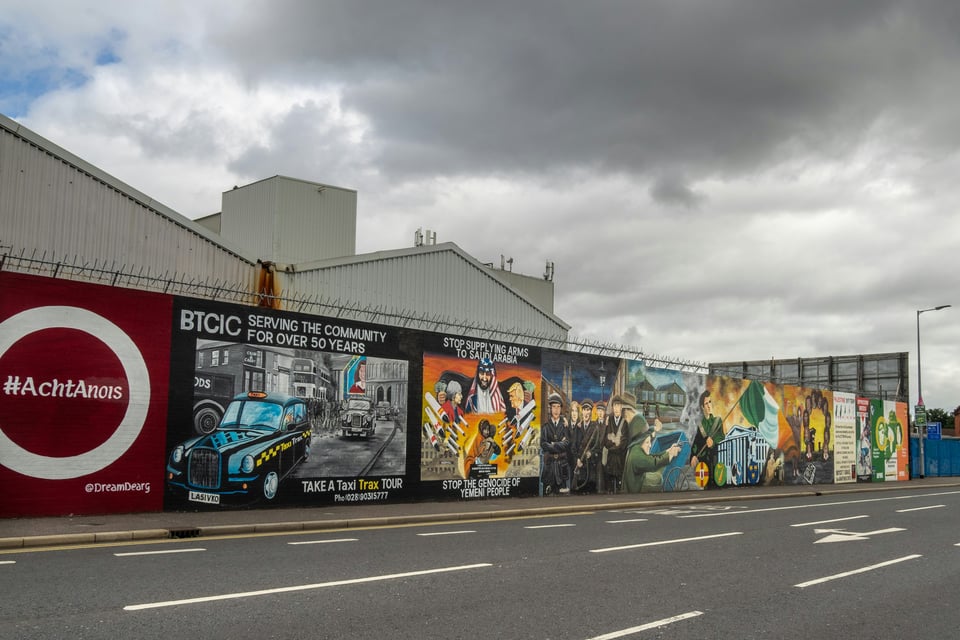
Dan Lambert, the manager for Kneecap, a hip-hop group from Northern Ireland, spoke at an event about fighting propaganda. He talked about the band receiving offers to be “educated on the Middle East,” how they were targeted when they declined, and how media interviews try to frame the debate before you have even said a word. He made a lot of great points, but the main one I wanted to highlight was what he said about heroes:
“If you walk through Dublin or London a lot of young peoples’ heroes are on billboards as people who are famous or have resources or have made a lot of money or have a fancy car.
Walk through Belfast and West Belfast and the people on the side of the building are probably dead and they probably died for something that meant more than money. They stood for something.”
He’s speaking of the Troubles, which included Northern Ireland being violently occupied by British troops and, ultimately, armed resistance developing as a result. I’ve been learning more about the Troubles recently (hmm, wonder why). PBS’ Once Upon a Time in Northern Ireland is the type of detailed deep dive you’d expect from public broadcasting, and the very type of reporting and history the Republicans want to defund. Hulu’s Say Nothing is a for TV dramatization of a book that faced push back from it’s subjects (though of course they were being accused of being part of a declared terrorist group so they might have reason to be less than vocal about that involvement). History rhymes. Both interesting in their own ways.
I got onto the Troubles via The Future of Our Former Democracy podcast by More Equitable Democracy, which approached the situation from the political and electoral angle of how a system of voting could help address issues that had lead to decades of violence. In particular two episodes featuring Pádraig Ó Tuama, a poet who works in the space of peace and reconciliation and has a great poetry analysis Substack, really struck me. Particularly his poem he read on the podcast, The Pedagogy of Conflict specifically the third part he reads here.
When I was a child,
I learnt to count to five
one, two, three, four, five.
But these days, I’ve been counting lives, so I countone life
one life
one life
one life
one lifebecause each time
is the first time
that that life
has been taken.
“Because each time, is the first time, that that life, has been taken.” Poets go hard sometimes. I appreciate Josie Gonsalves at Public Square encouraging me to participate in their News Poems initiative, publishing Arc and Lifeguards of Morality. Not to compare myself to Pádraig or any successful poets, but the form does give you some flexibility to distill down the morals of the situation in a way that sentences and paragraphs make difficult sometimes.
At the time I listened to the podcast, Gaza was front and center as I heard those words. But he’s not Palestinian, he’s writing of a childhood thousands of miles and decades away from the genocide in Gaza. And yet, you can feel both. The Troubles of his childhood, and the horrors of Gaza, rhyme. Lives snuffed out, one life, one life, one life…
September 15 is now indelibly marked as the worst day of their parents' lives. A day their surviving friends may struggle to speak about ever again.
Does anyone win when children are bombed? by Matt Dragon - Public Square
Half a year later, those lives are Keith Porter, Renee Good, and Alex Pretti. One. One. One. Gabriel Garcia-Aviles, Lorenzo Antonio Batrez Vargas, and Jean Wilson Brutus. One. One. One.
We can’t live in a world where all our heroes are dead. And luckily we don’t. We just don’t know who the next hero will be. But we do know they won’t be a fascist, they won’t be an occupier, they won’t be chatting up a child sex trafficker. They aren’t Musk, Zuckerberg, or Thiel. They aren’t Noem, Miller, or Homan.
They’re us.
Watch
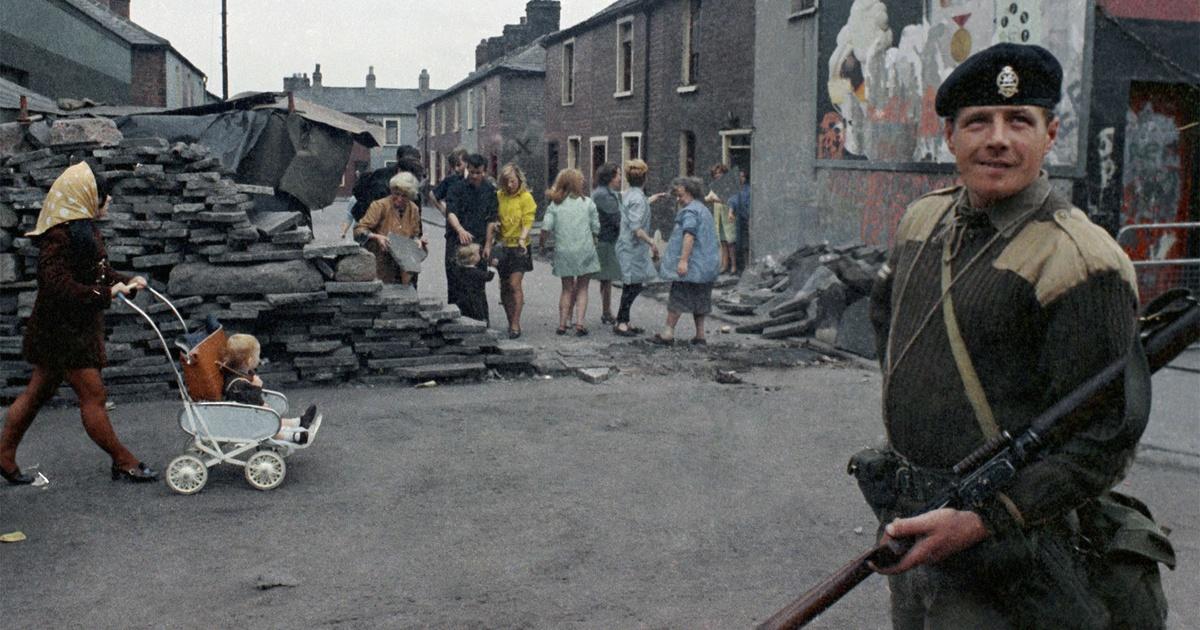
Once Upon a Time in Northern Ireland | PBS
Powerful series about ordinary people caught up in the Northern Ireland conflict.
Listen

Bonus: The Power of Language, Poetry, and Identity: Insights from Pádraig Ó Tuama - Pocket Casts
In this bonus episode, listeners can hear the full presentation and poetry reading from Irish poet, conflict mediator, and theologian Pádraig Ó Tuama, which was excerpted throughout season 1 of The…
Bonus: Pádraig Ó Tuama in Conversation - Pocket Casts
In this bonus episode of 'The Future of Our Former Democracy,' we’re sharing our extended conversation with poet, theologian, and conflict mediator, Pádraig Ó Tuama.…
Reading
Israel used weapons in Gaza that made thousands of Palestinians evaporate by Mohammad Mansour
Our humanity will never recover from the fact that unlike prior genocides where the world tolerated or was ignorant to what was happening, in this genocide the world (with few exceptions) not only knew, but participated.
So maybe the connection to starvation feels closer, more emotionally evocative than a child murdered by a sniper’s bullet to the head, or vaporized by a 2,000 pound bomb.
Starving children is the ultimate war crime by Matt Dragon - Public Square
But I can't even begin to conceive, of a set of actions, that will somehow absolve me, of the reality that I killed those kids.”
Omar El Akkad on the Between the Covers Podcast
For Rafiq Badran, who lost four children in the Bureij refugee camp during the war, these technical definitions mean little. He was only able to recover small parts of his children’s bodies to bury.
“Four of my children just evaporated,” Badran said, holding back tears. “I looked for them a million times. Not a piece was left. Where did they go?”

Israel used weapons in Gaza that made thousands of Palestinians evaporate | Israel-Palestine conflict | Al Jazeera
US-made thermal weapons burning at 3,500C caused 2,842 people to "evaporate" in Gaza, Al Jazeera investigation finds.
Analilia Mejia’s Upset Win in New Jersey Shows That the Movements for Palestine and to Abolish ICE Aren’t Marginal by Samuel Karlin
https://www.leftvoice.org/analilia-mejias-upset-win-in-new-jersey-shows-that-the-movements-for-palestine-and-to-abolish-ice-arent-marginal/It’s true that AIPAC miscalculated, but Mejia didn’t win only because AIPAC blundered. She won because her left-wing positions are becoming more popular, even in regions where capitalist interests are strong. This was clearly indicated by Zohran Mamdani’s victory in New York’s mayoral election. Even in New Jersey’s primary for governor, which Sherrill won on a centrist platform, Newark mayor Ras Baraka came in second after running the most left-wing campaign in the crowded primary.
The demand for left-wing positions is reflected nationally in polling, which shows that pro-Palestine views have gained traction, while other surveys indicate that opposition to ICE is growing. Mejia’s stance on these two issues in particular motivated people I know to canvas for her during one of the coldest winters in decades. As I have reported for Left Voice over the past several years, the movement for Palestine took root in the suburbs of New Jersey long before Mejia embraced the movement in her campaign. Regarding immigrant rights, it was only a few years ago that activists in our state successfully forced the closure of three ICE detention centers. Activists continue to fight every day against a renewed ICE offensive in our state.
We Have to Look Right in the Face of What We Have Become by Jamelle Bouie
The public attention associated with the Klan hearings helped suppress anti-Black vigilante violence in the South, but only for a time. Ultimately, the hearings did not produce the kind of legislation or federal effort that would have secured the promise of equal citizenship for the formerly enslaved. The more recent commission and hearings on Japanese internment, on the other hand, did lead to congressional action, and in 1988 President Ronald Reagan signed a law that acknowledged and apologized for the injustice of internment, which gave reparations to surviving internees or to internees’ heirs.
https://www.nytimes.com/2026/02/11/opinion/ice-victims-hearings-justice.html
Google Fulfilled ICE Subpoena Demanding Student Journalist’s Bank and Credit Card Numbers by Jessica Washington
“Your promises to protect the privacy of users are being tested right now. As part of the federal government’s unprecedented campaign to target critics of its conduct and policies, agencies like DHS have repeatedly demanded access to the identities and information of people on your services,” the letter reads. “Based on our own contact with targeted users, we are deeply concerned your companies are failing to challenge unlawful surveillance and defend user privacy and speech.”
In addition to Thomas-Johnson’s case, the letter refers to other instances in which technology companies provided user data to DHS, including a subpoena sent to Meta to “unmask” the identities of users who documented immigration raids in California. Unlike Thomas-Johnson, users in that case were given the chance to fight the subpoena because they were made aware of it before Meta complied.

Google Fulfilled ICE Subpoena Demanding Student Journalist Credit Card Number
Amandla Thomas-Johnson didn't know how much information ICE requested in a subpoena now. Google never gave him a chance to fight it.
The Liberal Case for Public Power by Ryan C. Smith
For natural monopolies in electricity production, the money paid by consumers winds up being more like a tax paid to investor owned utilities (IOUs) than as money paid in a competitive market for goods and services. US electricity markets practically guarantee this, with most electricity providers operating in what are, in fact, noncompetitive markets where the local power company is the only game in town. For most Americans, the costs and risks of electrical utilities are carried by the ratepayers in captive markets while profits go to the investors. Public utilities, thanks to their non-profit structure, are not subject to investor demands but instead must prioritize the good of their consumers and, as a bonus, pay no taxes on their operations. These differences are the core of makes public power cheaper to operate than most IOUs. These factors show why publicly owned power is as old as IOUs with examples in surprising places.
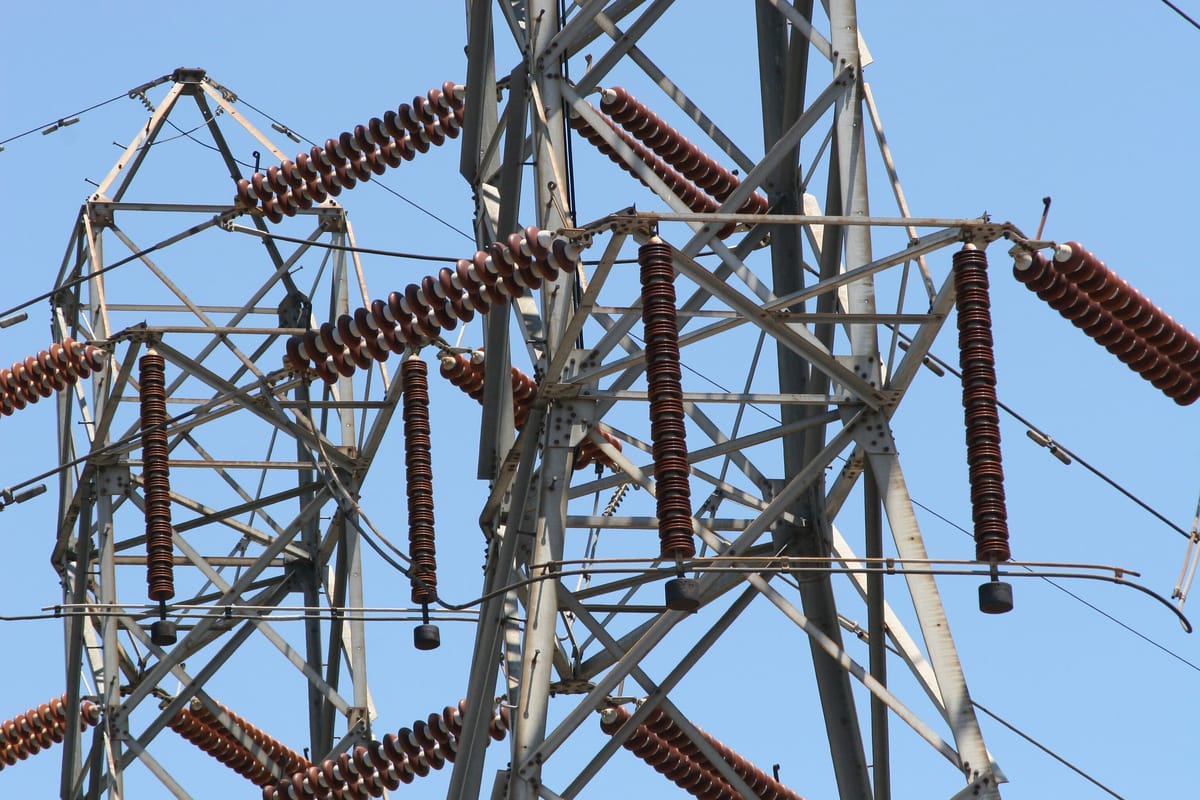
The Liberal Case for Public Power
When power is treated as a public good, it becomes cheaper, more reliable, and better positioned to meet the challenges of the future than privately held electrical utilities have ever demonstrated.
Judge throws out case against LA protester accused of assaulting officer with a cloth hat by Sam Levin
The judge ordered the case dismissed with prejudice, meaning it cannot be refiled. The judge further said the “right to protest is a core first amendment protection”, and allowing prosecutors to recharge Redondo-Rosales “risks sending a dangerous signal: that when officials are confronted with protest or criticism, they may respond with aggressive tactics and then deploy criminal charges that can be imposed, withdrawn, and revived at the Government’s discretion”.

Judge throws out case against LA protester accused of assaulting officer with a cloth hat | Los Angeles | The Guardian
Judge says US government acted in ‘bad faith’ against TikTok content creator Jonathon Redondo-Rosales, who was jailed for six months
AI safety leader says 'world is in peril' and quits to study poetry by Liv McMahon and Ottilie Mitchell
Maybe this means the poets are safe, at least until the AI designed bioweapons kill us all.
An AI safety researcher has quit US firm Anthropic with a cryptic warning that the "world is in peril".
In his resignation letter shared on X, Mrinank Sharma told the firm he was leaving amid concerns about AI, bioweapons and the state of the wider world.
He said he would instead look to pursue writing and studying poetry, and move back to the UK to "become invisible".


Add a comment: