Things I'm reading
What better place than here? What better time than now?

Apparently there’s another show going on across the street from here and it’s all… sold out.
Brothers and sisters, our democracy has been hijacked.
Brothers and sisters, our electoral freedoms in this country are over, so long as it’s controlled by corporations.
Brothers and sisters, we we are not going to allow these streets to be taken over by the Democrats or the Republicans.

Bulls on Parade (Live at 2000 Democratic National Convention) by Rage Against The Machine on TIDAL
Listen to Bulls on Parade (Live at 2000 Democratic National Convention) on TIDAL
No lies detected.
This recording of Rage Against the Machine, performing a protest show outside the Democratic National Convention in 2000, was released in 2018, an almost 3 decade old performance, approaching 10 years in a more widely consumable format.
First of all, it’s wild that a concert like even happened. In an era where national conventions have “free speech zones” far from the actual doors and everything is carefully organized and scheduled so that not even an ounce of dissent can leak out during the proceedings, the band literally raged against the machine. Well within earshot of those who couldn’t see the disconnect between their jobs and their musical tastes.
As the Wikipedia article notes, one of the concerns with allowing RATM to perform was their most recent album title. “The Battle of Los Angeles” was a nod to both the imagined aerial attack on the city during World War II and the ongoing message of the band’s songs that our government would never fix itself. It is the people, not the politicians who must create the will to solve our problems. It was also an excuse for an overwhelming and violent police presence, justified by the risk of violence. Where have we heard that before?
One song on the new album they played at the concert was “Guerrilla Radio” named for a practice of taking over the radio airwaves to broadcast your own content. These subversive radio stations ranged from playing music no commercial station wanted to play because they didn’t view it as money making to radio stations set up to help spread information to revolutionary forces seeking to overthrow their governments.
Three decades later, what are social media, Buttondown newsletters, and group texts if not “Guerrilla Radio?” At the time, radio was the cheapest way to reach people via an extremely common device that was basically omnipresent, in the home, in the car, in the stores you shopped in, etc. Sounds a lot like a smart phone today. While various forms of electronic communication can be controlled, the government controlled the radio spectrum, a fact that guerrilla radio stations worked around by just not giving a shit about rules.
So almost 30 years ago, Rage Against the Machine called out the Democrats for running a centrist, corporate driven campaign that was failing to distinguish itself from the Republicans. In doing so they celebrated the tradition of getting your message out despite the government lying to you and trying to censor you. Because ultimately our politics, and our politicians, were driven by corporate greed, not popular will.
They performed songs with lines like:
“Or for the vultures who thirst for blood and oil?”
“Who stuff the banks, who staff the party ranks“ and
“Some of those that burn crosses, are the same that hold office”
RATM lyrics never left much to require interpretation.
Sound familiar?
It has to start somewhere
It has to start sometime
What better place than here?
What better time than now?
Reading
Mamdani’s moonshot: A Department of Community Safety by Dana Rachlin, Alex S. Vitale
Hundreds of cities across the country are already doing this. We know tens of thousands of calls now handled by police could be diverted, with available data suggesting merely 7% of calls are for crimes in progress. Our efforts need to be focused on the predictable fallout of poverty, unmet behavioral health needs, and housing instability.
…
Safety is a shared responsibility across housing, health care, schools, community organizations and, when necessary, law enforcement. But continuing to structure the system so that crisis defaults to enforcement has not made New Yorkers safer. It has revealed the cost of confusing response with capacity, and supervision with resolution.
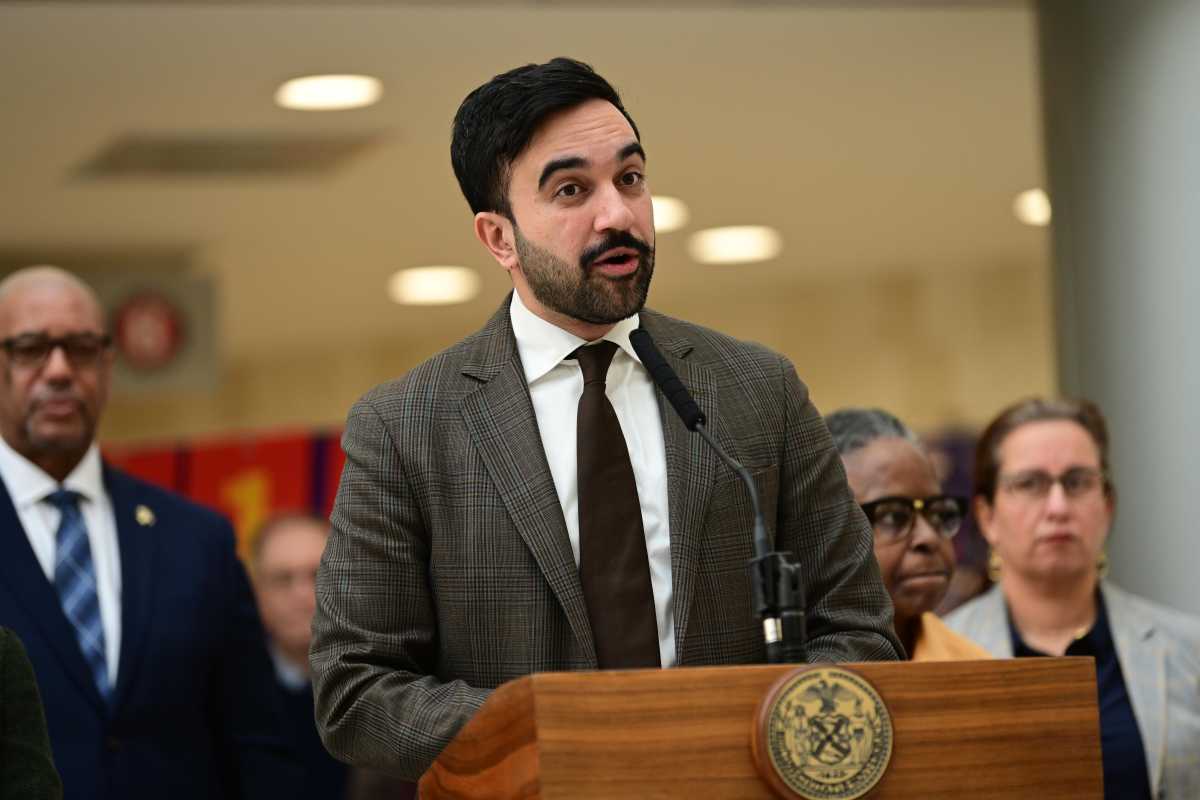
Op-Ed | Mamdani’s moonshot: A Department of Community Safety | amNewYork
A Department of Community Safety is how we change trajectory. Mayor Zohran Mamdani’s plan calls for expanding and retooling a number of existing programs to
Judge ends asylum claims for Liam Conejo Ramos and his family, orders family's removal by Regina Medina
An immigration judge has ended the asylum claims of Liam Conejo Ramos and his family, according to their Minneapolis lawyer.
The 5-year-old boy from Columbia Heights received national attention after he was detained by U.S. immigration authorities along with his father.
Attorney Danielle Molliver, with Nwokocha & Operana Law Offices, told MPR News on Wednesday that the firm is appealing the decision handed down by U.S. Immigration Judge John Burns. Molliver said an appeal could take months or years.

Judge orders removal of Liam Conejo Ramos family after asylum denial | MPR News
The family’s lawyers plan to appeal the judge’s decision to deport the family to Ecuador.
Federal judge in D.C. issues new grand jury policy after failed indictments of Democrats by Ryan J. Reilly
The grand jury system was first developed in England, and the handbook for federal grand jurors in the U.S. highlights the “celebrated English case involving the Earl of Shaftasbury” in 1681.
“Displeased with him, the crown presented to the grand jury a proposed bill of indictment for high treason and recommended that it be voted and returned,” the grand jury manual states. “After hearing the witnesses, the grand jury voted against the bill of indictment and returned it to the king, holding that it was not true.”

Federal judge in D.C. issues new grand jury policy after failed indictments of Democrats
Jeanine Pirro's office has recently clashed with Chief Judge James Boasberg over its attempts to prosecute people targeted by Trump.
US Mint takes down video of meeting criticizing proposed Trump 24K gold coin by Marisa Kabas
https://www.thehandbasket.co/p/mint-trump-gold-coin-ccac-video-removedJulius Caesar started off 44 BCE feeling pretty good: In January, as the story goes, the Roman Senate renewed his appointment as dictator, and the following month, they decreed he’d serve as dictator “for life.” They also announced that Caesar’s portrait would appear on coins—the first time any living Roman had appeared on currency. By March, he was murdered. So what does this have to do with Donald Trump?
From Disruption to Damage in the Iran War by Prof Robert Pape
The United States and its partners have incentives to keep the conflict at the level of disruption. Temporary disruption preserves the option of restoring order without incurring the costs of rebuilding destroyed systems.
Iran faces a different calculus. For Tehran, the stakes are existential. Survival, not stability, is the objective.
When survival is at stake, the rational strategy is not calibrated restraint so as to retain capacity to benefit later. It is to impose costs on the opponent that are deep, prolonged, and difficult to reverse.
From Disruption to Damage in the Iran War
The Threshold That Will Change the War—and Why It Cannot Be Easily Reversed
By Organizing Acts of Public Grief, We Build the Courage to Keep Fighting by Daniel Hunter, Stephanie Guilloud
https://truthout.org/articles/by-organizing-acts-of-public-grief-we-build-the-courage-to-keep-fighting/Unlike the apathy of corporations, political leaders, and those implicated in the Epstein files, the peoples’ reaction to violence looked like more urgency to resist, more action, more risk, more dedication.
They were not just reacting from a place of outrage, which can only motivate us for a brief time until the bone-tiredness sets in, followed by another wave of awful news. Outrage will not sustain. Their efforts took courage.
One ingredient for sustaining courage is the reminder that we are part of a longer history than just ourselves and that we must double down on love even in the face of loss and destruction. This is what intentional acts of public grief can provide.
…
These murders happen in public. They are sanctioned and paid for by public dollars and public institutions. And they aim to make us more afraid.
We will not let them. We will grieve the people we are losing, the futures lost, and the lives destroyed, to resist erasure, and to strengthen our nervous systems to continue our resistance. We do it to strengthen our collective resolve and remind us of the what the state is willing to do to defeat us. And we do it to challenge the way these deaths may be individualized or exceptionalized so we can remain courageous and together.
When we do this, it becomes impossible for the fascists to win. Not because we’ve defeated them in one final climactic battle, but because we’ve already built something better in the spaces between acts of state violence.
In A Great Nation, Women Make Dinner, Cocktails, and Babies...Right? by Van Jackson
But this vision presents a practical problem for capital—reducing the immigrant-and-woman share of the workforce is supposed to cause wages for everyone else (white men) to rise from a shortfall in the labor needed to produce profits. Oligarchy only benefits from the patriarchal vision as long as the vision goes unrealized. Even if only white men had full employment with high wages, the economics of oligarchy would fall apart. There is also no economic basis for recreating the 1950s fantasy.
And this is where everything gets really dark. Rather than pay the white man awesome wages, a system of oligarchy will undermine even the white man by exploiting the cheapest resource of all—slave labor. If you can put more people in prison, for whatever reason, you can extract their productivity for pennies on the dollar. If you can expand the homeless population, and then put homeless people in internment camps, which is happening as I write this, you can exploit them however you see fit because they’ve been erased. Similarly, domestic work is labor, but uncompensated and unseen.
https://www.un-diplomatic.com/p/in-a-great-nation-women-make-dinner
Substack doesn’t want writing or journalism – they just want profit by J.P. Hill
So I’ll be leaving Substack. This newsletter will keep coming to you from another, less profit-driven platform. I’m well aware that my overdue departure is just a blip. The much broader trend of profit-motive infesting and enshittifying everything is the story here. One feature of late-capitalism is apparently everything becoming a casino. The house always wins and, in the long-run, the 99% lose. Capitalism has already done massive damage to journalism, writing, the arts and more. Polymarket and Substack are just the latest in a long, detrimental sequence. But we’re all obliged to find ways to work against the profit drive destroying that which is precious to us, to take steps big and small, to organize and make choices to combat the relentless, degrading power of capitalism. So catch you next time from another platform.

Substack doesn’t want writing or journalism – they just want profit
Polymarket and the contentification of the entire platform
New York Residents Are Fighting a Data Center Backed by a Billionaire Trump Ally by Derek Seidman
She’s also upset about the public money that could subsidize the data center. “They’re asking for $801 million in subsidies,” she said. “That’s our money. The audacity to ask for that much money while I’m struggling to pay my electric bill.”
Yocina’s mention of $801 million in public subsidies is a reference to the package of tax exemptions the GCEDC is offering to Stream — a number that Stream is now looking to increase to a whopping $1.44 billion.
…
Tucked into Stream’s STAMP data center proposal is a short clause that notes the company is “strategically backed by Apollo Global Management-managed funds.”
Apollo is one of the world’s top private equity firms, overseeing $908 billion in assets. Apollo CEO Marc Rowan is worth over $7 billion, and he’s spent tens of millions of dollars in recent months and years buying up properties near the Hamptons, the elite enclave of Long Island.
This is a common theme around data centers in the 2020s just like it was for warehouses and corporate office space in the 2010s. States and Counties giving away enormous sums of taxpayer funds, to bring in companies that no one wants there, don’t drive jobs, and aren’t “profitable” unless they’re subsidized with public funds. Yet the companies and the CEOs/owners have billions in the bank, and are more than happy to spend it without public subsidies elsewhere. At the very least, public funds should be in exchange for public ownership stakes. But we also shouldn’t just build stuff because companies want to. Our glut of empty warehouses being seized on by the President’s Gestapo for concentration camps should give you all the historical context you need to oppose these efforts.
https://truthout.org/articles/new-york-residents-are-fighting-a-data-center-backed-by-a-billionaire-trump-ally

Add a comment: