Things I'm reading
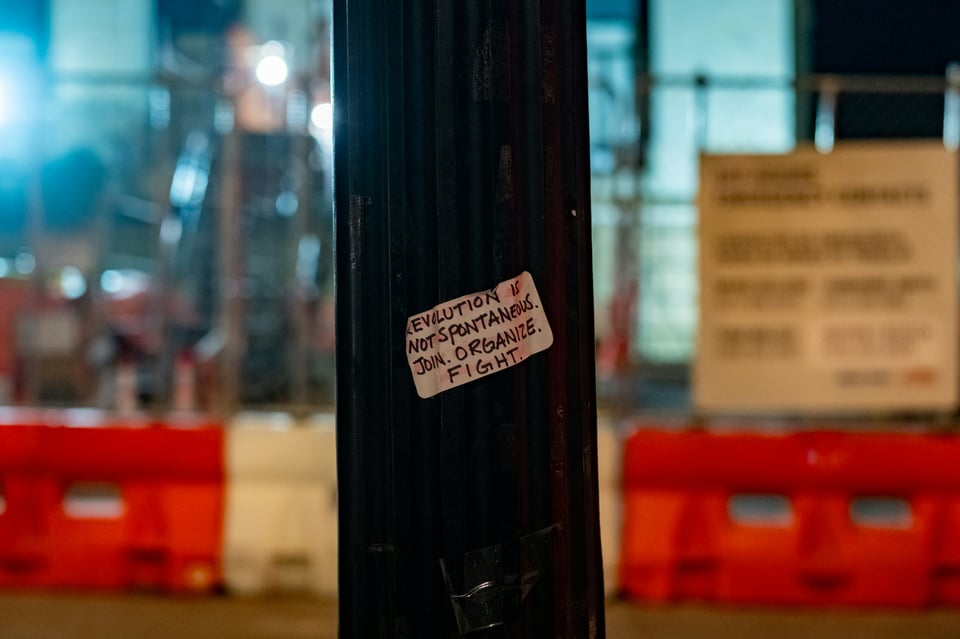
Join. Organize. Fight
Our copyright laws are deeply flawed. They empower large corporate hoarding of creative works. They are exploited to get tax write offs for not releasing movies after they’re made, because no one else can make that movie or use those characters to capitalize on that inaction. With the money they make off copyright, those same companies lobby for ever increasing time limits for enforcing their existing copyrights. Creatives who are stuck dealing with these massive corporations sign away their rights early in their careers, sometimes finding they can no longer profit off their own works later. But at the same time, they are the law, something we as individuals are expected to follow, but that corporations regularly flout.
Anthropic, like every AI company, has illegally vacuumed up millions if not billions of copyrighted works, and use those works every day to power their CSAM bots and suicide coaches. So you’ll excuse me for calling bullshit on them for using copyright complaints to go after people resharing the leak of source code behind their Claude AI bot. Hopefully someone they go after will have the resources to fight them in court, highlighting how they’re happy to be held to copyright law, so long as Anthropic is too.
AI works by externalizing the costs, while internalizing the benefits. We’re all facing increased electricity costs, because AI companies want to build data centers, but aren’t responsible for paying for the costs. We’ve all invested in creating content, or in consuming that content, which is how AI bots are able to “write” or “draw” or whatever, and the highest possible societal value we can find for that work is allowing AI companies to profit off it? And AI bots crawling the web have undermined actual human eyes getting to content, while flooding sites with bot traffic that doesn’t respect the limits and norms that have allowed the internet to flourish for decades.
AI’s ability to consume and distill content has promise as a way to help people understand the (needlessly confusing) laws and regulations that govern filing for unemployment. But if workers, laid off because AI could "replace them," benefit from an easier time applying for unemployment how does that ever become beneficial to society?
How many coal or natural gas power plants or inside the fence generators with a 20 year lifespan offset the advances in climate research that AI unlocks?
How many people must get laid off and lose their health insurance before the AI enabled cancer drug breakthrough that's completely unaffordable without insurance isn't a net benefit?
How many school girls are we ok with AI murdering in Iran?
We run our wars like AI companies. We benefit(?), bombing an apartment building because sending in troops to kill or capture that individual is “too risky.” Risky for who? We externalize the costs: destruction, death, fear, pain.
But those things always return to us. Whether through “terrorism” or PTSD, domestic violence, suicide. Because this level of violence, this brutality, the dehumanization it requires, doesn’t respect borders. Because what are borders but lines on a map. Love, hate, pain know no borders.
What is an AI company with only unemployed customers? What is an imperial warlord with no friends around the world, only victims?
Acting

Want to get me a birthday present or thank me for writing here? Donate to UNRWA
Reading
‘Her head was broken’: parents at Iranian school bombed by US describe their worst day by Tess McClure, Shah Meer Baloch
It would be a great disservice to you to pull any specific quote from this piece. You should read, and hear, every word.
Read it if you are a parent, come back to it because it hurts too much and you can’t take reading it all in at once. Read it if you are not a parent so you might understand even just a sliver of what it means to be a parent when children are bombed.
If we can’t wage war without ensuring this doesn’t happen (and we cannot), we simply must not wage war.
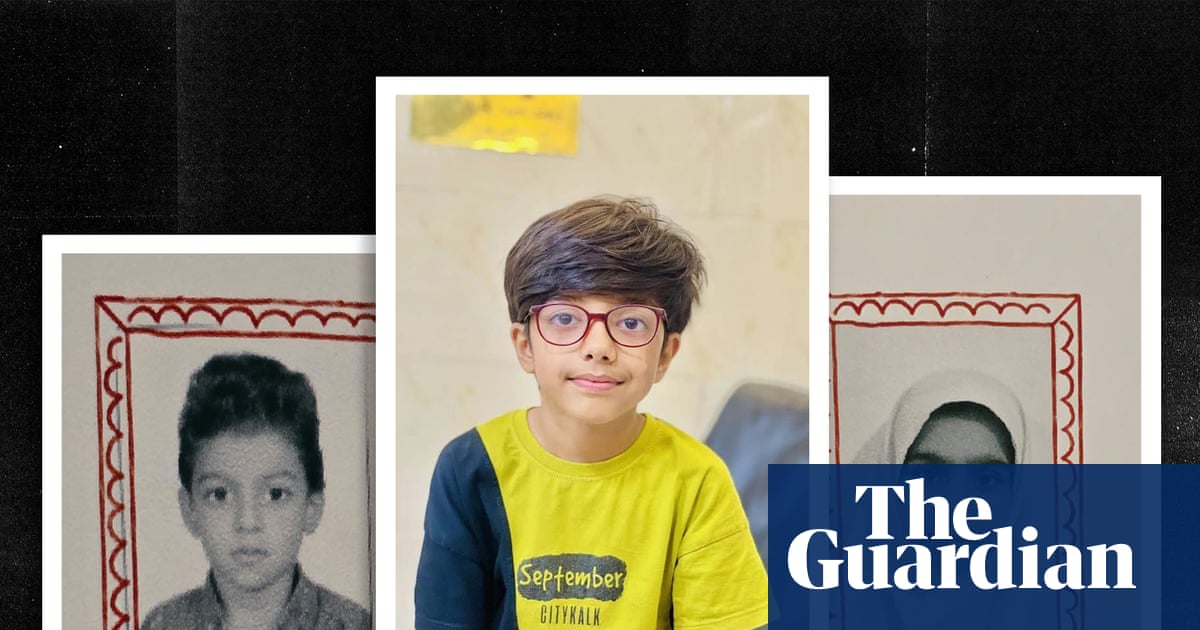
‘Her head was broken’: parents at Iranian school bombed by US describe their worst day | Children | The Guardian
Hours before the world learned that a US missile had hit Shajareh Tayyebeh school, parents were already searching the rubble for their sons and daughters. In this exclusive report, four families describe the events of 28 February
The girls had been very alive—in every special and unique way that made them daughters, sisters, classmates, and friends. In the middle of a laugh, a squeezing of a hand, or a smile, their worlds ended, and the world around them forever changed.
September 15 is now indelibly marked as the worst day of their parents' lives. A day their surviving friends may struggle to speak about ever again. For the rest of us, the world moved further off its axis.
Does anyone win when children are bombed? by me - 03/2025
It’s women’s rights, because of the dead mothers, the dead children, so many dead children. Girls murdered who will never grow up to become women. Fathers kidnapped off the street, held for decades without formal charges, never getting to meet their unborn daughter before they grow to become mothers themselves, or are vaporized before they can escape childhood. Mothers who must mourn multiple children all at once, after collecting bits and pieces in a bag to bury. And those are the “lucky” ones, because they didn’t die in childbirth because of a blockade on medical supplies, or see their babies killed before they could even get a birth certificate.
Could Mamdani be the generational candidate that transforms the DNC? by me - 07/2025
The Fight to Defend Pro-Palestine Speech on Campus Isn’t Over by Marianne Dhenin
https://truthout.org/articles/the-fight-to-defend-pro-palestine-speech-on-campus-isnt-over/That report, titled “Discriminating Against Dissent,” details how accusations of antisemitism are being weaponized as a pretext to advance a regressive agenda in higher education. It includes data showing a sharp rise in complaints of antisemitism lodged under Title VI of the 1964 Civil Rights Act against colleges and universities since October 2023. More antisemitism investigations were opened in the last two months of that year than in all previous years combined, and a new record number of investigations were filed in 2024, according to the report.
…
For years, that political infrastructure, captained by right-wing activists like Christopher Rufo and billionaires like Marc Rowan, has been wielded against educators who research and teach about race or gender issues. Now, Kamola told Truthout, it has pivoted to lobbing accusations of antisemitism at professors as a means of intervening in curricula and campus life. “You have this confluence of this right-wing attack machine that had been focusing on higher education for two decades that now is able to move away from the language of race and gender and also weaponize accusations of antisemitism.”
Many of these new accusations focus little on anti-Jewish speech and more on criticisms of Israel and its actions in Gaza, according to Kamola and the “Discriminating Against Dissent” report. Out of more than 100 antisemitism complaint letters analyzed in that report, almost all focused on speech critical of Israel. Close to 80 percent contained allegations of antisemitism that simply described criticisms of Israel or Zionism with no reference to Jews or Judaism. At least half of them consisted solely of such criticism.
Purity Politics Is A One-Way Ratchet by Peter Shamshiri
This is a really smart piece that you should read all of.
https://stringinamaze.net/p/purity-politics-is-a-one-way-ratchetI’m not particularly interested in litigating the details of the allegations against Piker, but suffice it to say that what I’ve seen is pretty weak. Cowan implicitly concedes as much, saying that “[l]eft-wing antisemites are savvier than the Nazi-endorsers on the right…the antisemites of the left cloak their attacks in critiques of the present Israeli leadership.” That’s a cute sleight of hand – there isn’t solid evidence that Piker is antisemitic, but that just gets chalked up to him being too “savvy” to reveal his true beliefs. (Cowan goes on to explain that he considers the use of the terms “apartheid” and “genocide” in the context of Israeli politics to be antisemitism, which gives you a sense of his angle here).
…
Booker’s office responded to Politico’s query by saying that the conversations Piker has “aren’t the kinds of conversations Cory participates in.” Here’s Booker talking to NY Mag in 2019 about the conversations he does participate in:
By the time I got to the Senate I was meeting with Grover Norquist in my office, with Newt Gingrich in my office. Every ally I could find on the other side of the aisle, and willing to do — have conversations that I think some people aren’t willing to sit down and have.
So Booker pats himself on the back for talking to Grover Norquist (a long-time radical anti-taxation activist who occasionally finds himself involved in lobbying fraud) while rejecting the likes of Piker, whose worst crime from what I can gather is a handful of marginally distasteful comments.
Most tellingly, Booker very warmly received Israeli Defense Minister Yoav Gallant in December 2024. The timing is important – it was just a few weeks after the International Criminal Court issued a warrant for Gallant’s arrest for using starvation as a weapon of war and targeting civilian populations in Gaza. Gallant, in cutting off food, water, and electricity to Gaza, said that “we are fighting human animals and we must act accordingly.”
The centrist wing of the Democratic Party is making two simultaneous pitches about the left: first, it is so evil that collaboration is impossible, and second that it is so feeble that it can safely be ignored. The first pitch is plainly a lie. The second may or may not be true, but the Cory Bookers of the world are staking their political lives on it.
Notes on Craft: Writing in the Hour of Genocide by Fargo Tbakhi
I use “Craft” here to describe the network of sanitizing influences exerted on writing in the English language: the influences of neoliberalism, of complicit institutions, and of the linguistic priorities of the state and of empire. Anticolonial writers in the U.S. and across the globe have long modeled alternative crafts which reject these priorities, and continue to do so in this present moment. Yet Craft still haunts our writing; these notes aim to clarify it, so we can rid ourselves of its influence.
Above all, Craft is the result of market forces; it is therefore the result of imperial forces, as the two are so inextricably bound up together as to be one and the same. The Craft which is taught in Western institutions, taken up and reproduced by Western publishers, literary institutions, and awards bodies, is a set of regulatory ideas which curtail forms of speech that might enact real danger to the constellation of economic and social values which are, as I write this, facilitating genocide in Palestine and elsewhere across the globe. If, as Audre Lorde taught us, the master’s tools cannot dismantle the master’s house, then Craft is the process by which our own real liberatory tools are dulled, confiscated, and replaced. We believe our words sharper than they turn out to be. We play with toy hammers and think we can break down concrete. We think a spoon is a saw.
…
This is what Craft does to our writing: pressures and pressures until what matters, what we need to say, gets pushed to the margins or disappeared entirely. It is a Craft decision to describe Palestinians as human animals. It is a Craft decision to pressure U.S. officials not to use the word “ceasefire” or “de-escalation.” It is a Craft decision to describe Israelis as “children of light” and Palestinians as “children of darkness.” It is a Craft decision to begin interviews demanding Palestinians condemn violent resistance, a Craft decision to erase the perpetrators of bombings from headlines describing the bombings, a Craft decision to question the reliability of Palestinian death counts. These are Craft decisions because they are decisions which occur in language, and that language feeds and is in turn fed by policy. Somebody, with a name and an address, wrote, vetted, revised, and spoke aloud these words. The tools they used to do it, the ideologies which filled their vocabulary—these are Craft.
…
We must be engaged in this kind of writing, which calls others into mobilization, generating feelings within our audiences that cannot be dispersed through the act of reading, but must be carried out into collective action. You sit, you read something, you feel grief or anger or joy, you get it all out, you put it down, you go about business as usual—this is the coercive affective system that Craft insists upon. We must write in such a way that there is no business, there is no usual. We must write so that, as Boal says, “the action ceases to be presented in a deterministic manner, as something inevitable, as Fate… Everything is subject to criticism, to rectification. All can be changed, and at a moment’s notice.”
Notes on Craft: Writing in the Hour of Genocide • Protean Magazine
Fargo Tbakhi writes with this reflective essay on the role and duty of writing in this time of a genocide. How do hegemonic prerogatives dictate style, content, and status? What can words do for us, when words are also the vehicle of cruel ideology?
Cringe Is Good, Earnestness Is Strength by Alan Elrod
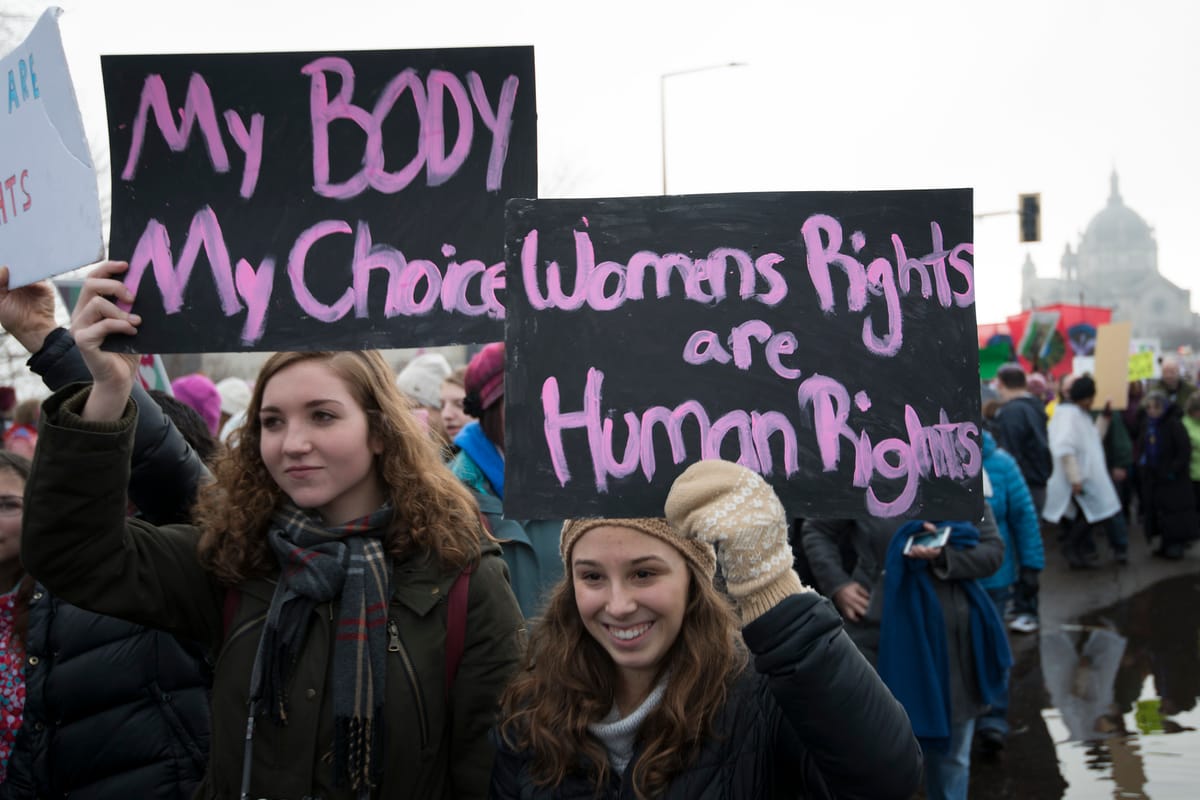
Coolness is almost always framed as manliness in a traditional, normative sense. Trump’s defeated opponents, Hillary Clinton and Kamala Harris, are mocked by many, including online progressives, on sexist terms about their appearance and approachability. Similarly, the pink hat–wearing liberal women who have marched consistently against Trump since his rise, the kind of liberal archetype so many online sneer at as overly earnest and ultimately ineffectual, are regularly discarded as “wine moms.”
But this is wrong. Those marches mattered. The political work done by a lot of middle-aged women to register voters, sign political petitions, and organize communities matters. And it’s all been done with the delightfully unvarnished—some might say “cringeworthy”—enthusiasm of people, particularly women, unafraid to show they care. It was Renée Good, a thirty-seven year-old mom in an SUV, that ICE agent Jonathan Ross gunned down in Minneapolis.
Cringe Is Good, Earnestness Is Strength
On irony poisoning and the importance of being earnest.
US spends $2.1 billion a day on the Iran War by Stephen Semler
Every day we're spending 10 times as much money to bomb school girls in Iran as we spent for entire years on UNRWA's efforts to support Palestinian Refugees. In three weeks, we have exceeded the annual budget for USAID, which was not without its faults, but was something that saved lives overall, instead of indiscriminately taking them. Who benefits? Who profits?
The US spent an estimated $28.7 billion in the first two weeks of the Iran War, or $2.1 billion a day on average. This is based on my analysis of officials’ statements, federal procurement and operations data, and reporting on military deployments and armament use. This estimate refers only to direct war costs — near-term expenses for military operations, munitions, and the like — and not indirect costs, which include broader and longer-term factors like economic impact and veterans’ care.
https://www.stephensemler.com/p/us-spends-21-billion-a-day-on-the
Anthropic Races to Contain Leak of Code Behind Claude AI Agent by Sam Schechner
Oh so now you care about copyright? Motherfucking hypocrites.
https://finance.yahoo.com/sectors/technology/articles/anthropic-races-contain-leak-code-115600081.htmlAnthropic is racing to contain the fallout after accidentally exposing the underlying instructions it uses to direct Claude Code, the popular artificial-intelligence agent app that has won the company an edge with developers and businesses.
By Wednesday morning, Anthropic representatives had used a copyright takedown request to force the removal of more than 8,000 copies and adaptations of the raw Claude Code instructions—known as source code—that developers had shared on programming platform GitHub.


Add a comment: