Things I'm reading
Across the globe, it's a tough year, decade, century, epoch to be a woman.
I wrote a lot last time, so much so I had to carry some of these articles over here. (Sorry, not sorry) So I’m not going to write so much here, except for a few specific thoughts sprinkled into the pieces below. But you really need to read most of these pieces end to end. My excerpts can’t do them justice.
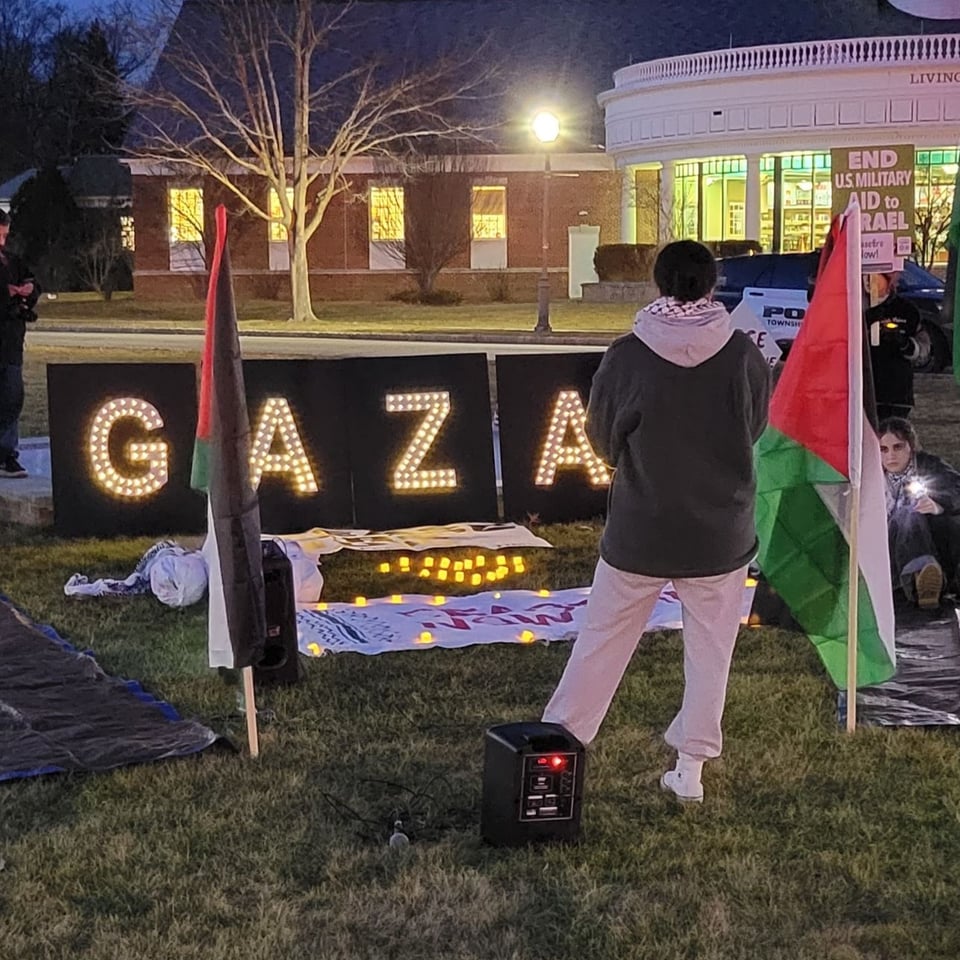
My birthday month is almost over, please consider donating to UNRWA.
Join me in making a donation to UNRWAActing
Tell your Reps to Support a War Powers Act on LebanonReading
Nowhere is safe by Lyz Lenz
https://www.patreon.com/posts/nowhere-is-safe-155863401Fifteen years ago, when my daughter was born, I did not know how I would keep her safe from assault. I was not worried about the looming threat of a stranger; I was worried about my family.
I wrote about this in Wednesday's newsletter, but my former brother-in-law abused my younger sister for years. And when my daughter was born, he was still part of the family. And, as I learned last week, despite the fact that my older sister divorced him 12 years ago, he's being welcomed back.
That news came two days after news broke of the sexual assault and misconduct allegations against now-former Rep. Eric Swalwell. Amid all that, a March CNN investigation resurfaced about an online rape academy where men learned how to drug and rape their own wives.
Also last week came the news that the former lieutenant governor of Virginia had shot and killed his wife and himself. He, too, had been accused of assault. His wife was leaving him and had been granted primary custody of the children.
The same week, a teenage girl's stepbrother was charged with her murder and assault.
Days before that, a husband was found guilty of trying to push his wife off a cliff on her birthday.
We could all find more of these stories if we looked. But we don't need to look.
And I already know the statistics by heart:
The number one cause of death for pregnant women is homicide by their partners.
One in three women is a victim of rape by an intimate partner.
There is no male loneliness epidemic. There is only an epidemic of male violence.
LARPing the Mom Rage Out by Sara Sadek
I have witnessed a mother’s fury. Our power in birth, in tending, in activism, in care. I have witnessed our power in protecting. I want us to access that power together, and let it flow freely through our veins, out our bodies, into the world. I want us to learn together how to harness our rage—we need to learn how to channel it.
More and more of us realize it’s time not only to refuse to clean this mess up—it’s time to refuse to play out any part in it. Whether we quietly quit in refusal, or reject the nuclear family and architect something different in refusal, or burn it down in a satisfying roar of divorce in refusal, or simply leave to build something better in refusal. Because whatever this is that’s happening right now: it just is not it.

LARPing the Mom Rage Out - Sara Sadek's Field Notes
What to do with the patriarchy laid bare
'Ballot Siberia?': NJ progressives claim 'clear' violation of outlawed design for voting by Mike Hayes
Kate Delany, president of the South Jersey Progressive Democrats, said the ballot’s design mimics what was colloquially known in New Jersey politics as “The Line,” which gave priority to candidates who secured the endorsement of powerful local county committee groups by listing them vertically with prominent party leaders, even though they were running for different offices.
The practice was common in the state until it was outlawed last year.
”It’s clear that it's guiding people to do what they always did with the old ballot, where people just voted right down the line,” Delany told Gothamist. “ We see this as a clear violation of the ballot law.”
Delany said the design pushes the organization’s progressive candidates to the side of the form in “ballot Siberia,” forcing voters to look away from the line that they're “visually guided to go down and over several columns” for their candidates.

'Ballot Siberia?': NJ progressives claim 'clear' violation of outlawed design for voting - Gothamist
Just a year after "The Line" was outlawed in New Jersey, Democrats are feuding with each other over ballot design.
Dispatches From Catastrophe - As told to Maya Rosen and Jonathan Shamir Introduced by Tareq Baconi
Stop what you’re doing and read this whole thing.
In November and December 2025, Jewish Currents reached out to some two dozen Palestinians from Gaza and the West Bank—all of whom the magazine had previously interviewed after October 7th, 2023—to ask them how their lives had changed since they last shared their stories.
The resulting testimonies are difficult to read. They show the effects of years of industrialized, live-broadcast massacres and colonization, particularly in Gaza, where more than 10% of the population is estimated to have been killed or injured in the last two years. The Gaza dispatches are a portal to a place where dystopian science fiction—the exporting of killing to artificial intelligence and robots, the shooting of children lining up for food aid, the crushing of people under air-dropped food parcels—has become reality. We see how Palestinians’ very fabric of life, of home and family, has been torn apart; we see a world where being killed may be more merciful than continuing to bear the indignities of living. As Saleh, displaced in the West Bank but watching his family live through the genocide in Gaza, puts it, “We’ve grown tired of life.”
I can’t help but read these dispatches through the prism of grief. Grief often manifests as a state of unreality: The world around the grieving person becomes a theater, a space where life plays out at a distance, somewhat removed. Survivors of the Gaza genocide seem similarly cloaked in disbelief at the lives they are living, unsure of how they got here, unable to process how much was taken from them. For all the crimes of the genocide, this is perhaps the most heinous: the theft of time; the erasure of the past recorded in Gaza’s land and cities, the blocking of any sense of future, the darkness shrouding the present. Reading these excerpts, one feels that the Palestinian condition of waiting—at checkpoints, for medical care, to travel—has been taken to a new extreme. Now, the wait is to bury the dead brought out from under rubble, to secure an elusive next meal, to survive the cold and rains of winter.
The individuals interviewed here shared their reflections weeks after the so-called ceasefire came into effect. There is no way to deny the relief that comes with diminished bombing. But the structural reality of genocide—that is to say, the concerted effort to erase Palestinian life—persists. Gaza has simply, according to Mohammed Zraiy, entered a “new chapter of suffering.” Aside from the ongoing killing, humanitarian aid barely trickles in, and if food is available, it is unaffordable. Borders remain impenetrable, with families scattered between the UK and Gaza, Egypt and Jordan. Just like time, space too is frozen, with Palestinians geographically suspended, unable to travel or reunite. Even those who have made it out of Gaza remain tethered to family members living in tents, and are reliving the genocide over their phones even as their bodies are safe elsewhere.
This is the structure of the Nakba: fragmentation and dispossession; constantly searching for a return to one’s homeland amid the colonial quest for erasure. “The true homeland is one that protects the dignity of the person,” Adel al-Ramadi in Gaza reminds us. For now, there is no such place. There is a profound cruelty to the “choices” forced onto Palestinians along the way. Do they flee mass death, knowing that flight will then be used against them, weaponizing the prevention of return? How can Palestinians make the decision to whisk their children away from bombs when this may mean condemning them to homelessness, displacement, and destitution? Is the level of sadism on display in this genocide meant to break the Palestinian spirit of survival, or simply to torture Palestinians for it?
These are not questions limited to Gaza. These dispatches include Palestinians from the West Bank, who have increasingly faced land grabs, home demolitions, and growing dispossession after October 7th. The line separating the State of Israel from its colonizing apparatus in the West Bank was already illusory; now, even that pretense has disappeared. Soldiers turn into settlers, settlers into soldiers; in both guises, they terrorize inhabitants of pastoral communities as well as small towns and villages throughout the West Bank. Here, too, we see sadism: women forced to go into labor in cars parked at checkpoints, or surviving hours of contractions to avoid the terror of driving to a hospital at night; a father shot to death in front of his toddler while filming a settler.
Ceasefire or not, such violence continues with the full backing of the state. The apartheid regime and its mercenaries have internalized the correct lessons from Gaza: They can get away with anything. The half-hearted attempt to separate Israel and its “legal colonization” of 1948 from the settlers and their “illegal colonization” of the West Bank is now moot. Ghassan Najjar from Burin is correct; what was once under the table is now all above it.
Which is why it’s worth noting that these dispatches are missing the voices of Palestinians who remain inside the Israeli state. Ironically, they are possibly the people most terrified of speaking about their lives due to the level of surveillance and intimidation from the government and their neighbors; nevertheless, their experiences living amid a society responsible for genocide are an important part of the Palestinian story of the past years. Missing too are the Palestinians in Israeli prisons, who have been experiencing the horrors of torture, deprivation, and systematic sexual abuse for years, and who have mostly been blocked from the outside world since October 7th. Their stories exemplify Israel’s relentless push to crush any commitment to Palestinian life and resistance, wherever and however it might manifest.
https://jewishcurrents.org/dispatches-from-catastrophe
Editor’s Note | We Unknowingly Published an AI Column by a Fake Author. Here’s What Happened. by Kevin Edwards
As Voices editor, I’m responsible for managing the wide variety of writers who reach out to us and who want to share their writing and their stories, whether paid or unpaid. Ninety-nine percent of the writers I’ve worked with since starting last September have, in my opinion, furthered this mission. I think about Sharon Leslie Morgan, who reached out to me late last year and asked to write about her decision to spend the last years of her life in Mississippi researching the history of her enslaved ancestors in Noxubee County. Morgan died earlier this year.
It’s unfortunate that I have to treat new writers with this level of suspicion, but that is the world we live in and the adjustment I will make. It’s easy to suggest just throwing a column in an AI detector, but AI detectors aren’t very reliable. And we aren’t the only news outlet confronting this issue.
We also want to emphasize voices—not just the name of our opinion section, but the voices that share the stories you read about. If you look in our archives, you can see a wide variety of submissions. From essays to rigorously researched columns, you can see there is heart to these columns. We want to bring people, their stories and their words to our table. And in our newsroom, that will be done without the use of artificial intelligence.
Writing is supposed to be a human endeavor. You can argue that some of the stuff people use AI for is about time savings or efficiency. I’d argue we could all perform those tasks faster if we could be wrong and have no accountability. But writing and art are human expressions, of fact, of emotion, of feeling, of vision, that AI will never be good at, and even if it was, we should have no desire to consume. Why read something no one wrote. Why "read" something via AI if you can't be bothered to actually read it.
The real downside here is that new writers will have an even higher barrier to entry. Voices will be missed in the noise. Stories will go untold. Those voices, those stories, are what billionaires and governments should be investing in. That's how we make the world a better place.

Editor’s Note | We Unknowingly Published an AI Column.
The editorial team at the Mississippi Free Press discovered we published a column written by a fake author using artificial intelligence.
Why Altman (and AI) is under attack by Robert Wright
Altman suggested a causal link between the two kinds of attacks. In a blog post about the attempted firebombing, he called the New Yorker article “incendiary” and noted that it came in a time of “great anxiety about AI.” Maybe, he mused, the attack on his home was testament to “the power of words and narratives”.
A debate about the relationship between strong words and radical action was already happening in AI circles, owing to an armed attack a week earlier on the home of an Indianapolis politician who supported the construction of a local data center. The Altman attack turned the volume up a notch.
Nirit Weiss-Blatt, who writes an anti-AI-alarmism newsletter, assessed some Discord posts written by the accused firebomber and concluded that he had undergone “a long radicalization process shaped by ‘AI existential risk’ rhetoric.” OpenAI’s global policy chief, Chris Lehane, connected the Altman attack to the “very, very negative and dark view of humanity” held by “the Doomers.” Lehane said, “When you put some of those thoughts and ideas out there, they do have consequences.” Putting a finer point on it, White House AI adviser (and wealthy veteran of Silicon Valley) Sriram Krishnan highlighted the title of a book co-authored by Nate Soares and Doomer-in-chief Eliezer Yudkowsky. “This is the logical outcome of ‘If we build it everyone dies,’” Krishnan tweeted.
So weird that telling 80% of workers that your technology will destroy their lives while making you super rich might engender some blowback. You don’t have to blame reporters, they’re just telling people what you’re saying and doing. Maybe you should look inward, Sammy.
https://www.nonzero.org/p/why-altman-and-ai-is-under-attack
In Article About Horrific Shooting That Killed Eight Children, Forbes Lets Readers Place Bets About Gun Control by Maggie Harrison Dupré
Eight children were murdered in a horrific mass shooting in Shreveport, Louisiana over the weekend. Forbes published an article about the violent killings — and, alongside that reporting, included a prediction game widget that encouraged readers to place bets on upcoming gun control regulation.
The incident, which was first caught by cryptocurrency journalist and researcher Molly White and shared to Bluesky, was the result of “ForbesPredict,” a prediction market-lite feature that Forbes integrated into its platform earlier this year.
Underneath a chunk of text describing the Shreveport gunman, a 31-year-old named Shamar Elkins, a ForbesPredict box appears. It implores readers to “make your prediction” on “gun policy,” asking whether they believe “Congress WILL pass new gun safety legislation before 31st December 2026.”
…
In a January interview with Digiday Forbes chief innovation officer Nina Gould described ForbesPredict as the “gamification of following a story.”



Add a comment: