Things I'm reading
It's our humanity, but we must defend it or lose it.
We are at an inflection point. It’s still an open question of which way that inflection takes us. We could be on the verge of a huge shift toward community, social care, improvements to peoples’ conditions we haven’t seen since electrification or indoor plumbing. Or we could be on an accelerating path toward authoritarianism and fascism. How do we know or steer the direction we’re heading?
This is visible on many levels. We see politicians chasing social media posts and independent reporters. Representative Rob Menendez, tagged an online streaming independent journalism group, on his post about being at Delaney Hall. Not the NY Times, not some Congressional Democrats account, an independent journalism team.
At Delaney Hall fascists are trying to deport victims of ICE who are organizing within the detention center. Social media posts and independent journalists broke the hunger strike happening inside Delaney, and the New York Times, followed, sending reporters and photographers rather than having the story come to them first.
As the internet we know and love is slowly strangled, walled gardens hellscapes replacing open, vibrant, and free, we have both more information available, and less control of receiving that information than at any time in history. AI can only make the situation worse.
While some would note that AI chat bots might currently represent better search engines than whatever the fuck Google is doing, ultimately AI is a drain on our information environment. AI bots are aggressively crawling the internet, jacking up bills and making sites worse for human users. Not because crawling the internet is a new concept, but because AI companies, in their quest to steal all content ever published, simply disregard the established policies and norms. AI bots crank out fake text, fake images, fake quotes with fake sources of attribution. Nothing that comes out of AI is real. AI undermines trust, during a period when our trust is at all time lows already.
We don’t need AI, we need human writing, human art, human connection. Our destruction of humanity, from Palestine, to Cuba, to the Global South via Capitalism’s inexorable death grip of Climate Change, all of it is because it is far too easy to remove people’s humanity. AI can never fix that. Autocomplete cannot tell stories, even if it can produce words that roughly, but soullessly mimic them.
The way forward is to embrace humanity. Share a post by another human. Talk to another human about what you’ve read. Circumvent AI moderation on social media by emailing or texting someone a link to something that moved you. Circumvent the captured corporate media by subscribing to or sharing stories from independent journalists. Show up for your community, whatever shape that takes for you. That is the way forward. That is humanity. That is what we can do.
Reading
ACLU Condemns House Passage of Bill Censoring Teachers and Forcibly Outing Transgender Students
“Every child in this country deserves the same opportunity to thrive as their peers, and that includes transgender students,” said Mike Zamore, National Director for Policy & Government Affairs for the ACLU. “Instead of strengthening that basic promise for all students, a narrow majority of the House opted to single out and endanger some of the most vulnerable youth in our schools today. This bill doesn’t create a safe learning environment for anyone – quite the opposite -- but it does inject politics into every classroom across the country, which harms education for all students. Censorship and discrimination have no place in our schools, and we call on the Senate to reject this bill.”

ACLU Condemns House Passage of Bill Censoring Teachers and Forcibly Outing Transgender Students | American Civil Liberties Union
WASHINGTON – The American Civil Liberties Union condemned a bill that passed today in the U.S. House of Representatives threatening to censor...
Go Get Your People by Ash-Lee Woodard Henderson
White people, stop what you're doing and read this whole thing.
https://medium.com/@ashleewoodardhenderson/go-get-your-people-0ecfccfe5b29I want to be clear: My assessment is that joy as defiance only works if it has been earned by grief in this moment. For white folks specifically, and privileged folks in general, the temptation is to skip past the grief and arrive at the joy, because grief is uncomfortable and joy is all too often permission to look away. That bypass is exactly what Black folks have been naming when we say we are not seeing white grief that matches the risk we are being asked to take. The refusal to quit, in this slice of the population, has to include a refusal to look away. To tell the whole truth. To name the problem, not just as it affects folks of color (which has to happen) but as it impacts other suffering white folks, too. That is the assignment this memo is making.
…
They are the disgusted. The exhausted. The “both parties are the same” crowd. The ones who voted in 2008 and 2012, maybe even 2020, and then stopped. The ones who watched the Democratic Party fail to deliver on anything material and decided their vote was not worth the gas money. The ones who lost a job or a house or a parent to the opioid crisis and never saw a politician show up after the funeral.
This population is not apathetic. It is unhoused, politically speaking. You cannot guilt them into voting. You cannot shame them into showing up. You have to give them somewhere to belong. You have to show up before there is an election. You have to be the one bringing the casserole when somebody dies, not the one knocking on the door and introducing yourself the week before early voting starts.
The Politically Homeless are not just waiting for a better candidate. They are waiting for a community that proves itself before it asks for anything. SURJ chapters in small towns, mutual aid networks, the choir that sings at the courthouse every Friday, the people running food pantries out of church basements. That is the infrastructure that absorbs the Politically Homeless. Not a mailer. A home to practice community in.
…
Most white people in this country were raised on the lie that America is good and getting better. When that lie breaks, they do not know what to do with their grief. They either rush to optimism or they fall into despair. Neither one fights.
Real organizing has to make room for the loss, make meaning, and ask for action. Again, part of why folks of color are frustrated right now is that we are not consistently seeing white grief at scale that matches the risk we are being asked to take. We are being asked to put our bodies, our families, our status on the line, and what we are seeing back is white people rushing to joy, rushing to hope, rushing to “we’ll get through this” before they have sat with what is actually happening. Hope that skips grief is not solidarity. It is bypass. And the people on the receiving end of the violence can feel the difference.
Let me be clear about this. Grieving is not the same as giving up. Grief is what proves you were paying attention. Grief is what proves you loved something. People who won’t grieve won’t fight well, because they’ll never let themselves feel and know what was at stake. The folks I trust in this work are the ones who can cry on Monday and organize on Tuesday. That is not weakness. That’s sound practice.
Objectivity Was Never Neutral by Mohammed R. Mhawish
This is a truth that certain editorial frameworks struggle to hold. Western journalism’s model of objectivity—which is not really objectivity but a form of social performance of objectivity, developed in a certain country at a moment in the history of professional guilds—treats the reporter’s distance from the subject as a measure of credibility. The closer the journalist is, the more suspect. This model has always served some reporters better than others. The reporter who covers the Midwest as a native Midwesterner is perceived as authoritative, while the reporter who covers Gaza while being from Gaza is understood as potentially compromised. The asymmetry reflects whose proximity has historically been legible as background and whose has been legible as bias.
I did not fully anticipate how differently this weight would register once I was outside Gaza. In the field, everything was immediate in a way that foreclosed interiority. There was no processing because there was no pause in which processing could occur, and that absence of pause could function as a kind of stability, or what stability looks like when health is not available. We kept reporting because we could not stop. It gets called resilience, though it has always felt more like a suspension of reckoning.
Now the suspension has lifted, and what did not surface then surfaces in my sleepless nights. The bombardment does not remain in the past where it chronologically belongs. It returns to me unpredictably. This is familiar to anyone who has read the clinical literature on post-traumatic stress. However, this clinical literature was mostly written by people who studied it from the outside, and there is something it does not quite capture: the experience of a journalist who is also a subject, reporting on people whose condition is a version of his own, who must take notes during the fragments and then file before deadline. This understanding has arrived, though late, with immense pain.
The professional adjustment fits inside a longer history. Palestinian journalists have always had to translate themselves for Western audiences, not to have their reporting recognized, but to establish their right to report at all. This is partly an effect of how the struggle of their people has been narrated from the outside: as a bilateral dispute between two parties with symmetrical claims, which requires symmetrical distance from all reporters and has the effect of treating Palestinian identity as a form of partisanship. It is also an effect of something older and less specific: the general suspicion, in Western media institutions, of reporters who are from the places they cover, a suspicion that applies unevenly and has consistently applied most heavily to reporters from the Global South.

Objectivity Was Never Neutral
Leaving Gaza did not stop the work. It only changed how it followed me. By Mohammed R. Mhawish
Democrats Need to Realize What Time It Is: On Conjuncture, Revolution, and the Next American Republic by Alan Elrod
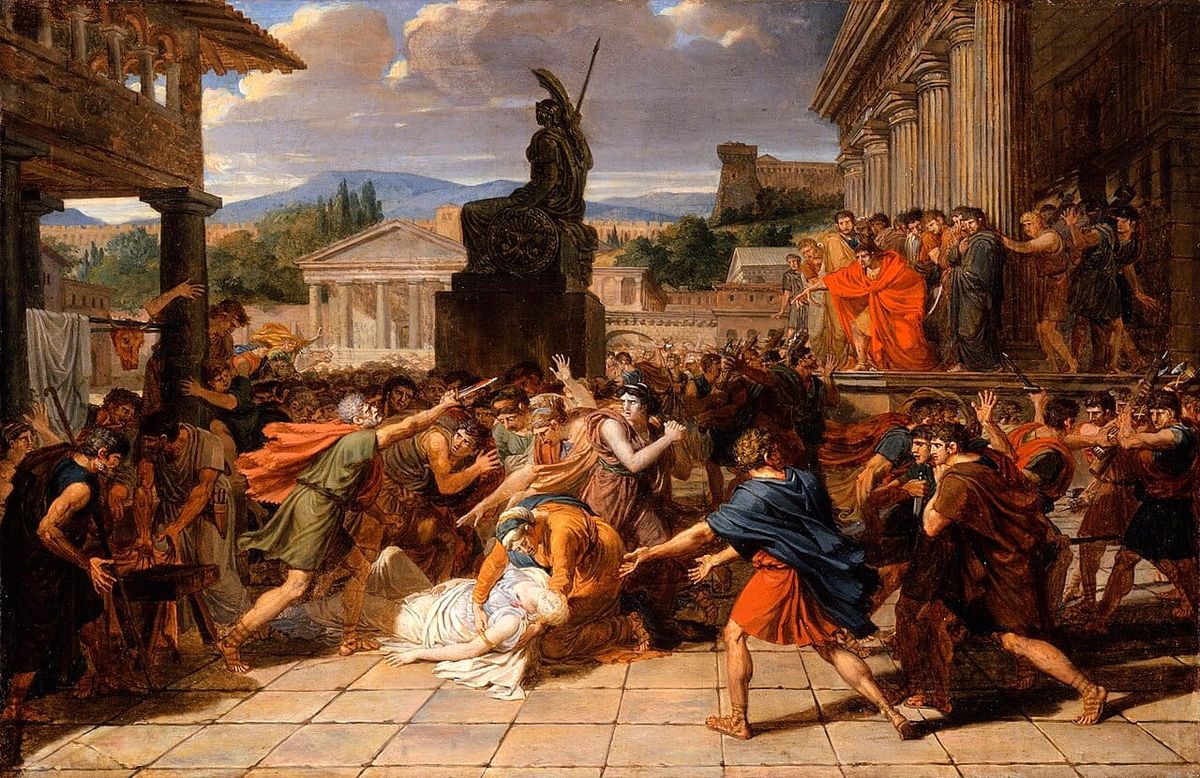
Bouie is correct, but I want to add some additional urgency to his point. What we need to grasp about this moment, and what Democrats in particular need to understand, is that a revolution is already underway in this country. This is a moment of drastic, monumental change, initiated by a Republican Party poisoned by illiberalism and anti-democratic resentments and a figure in Donald Trump who wants to arrogate monarchical, despotic powers to himself.
In her book, The Rise and Fall of the Second American Republic, Manisha Sinha frames the period from the outbreak of the Civil War to 1920 as a new formulation of the republic, ruptured from the first and its slaveholding traditions. It continued, shepherded fretfully from the immolation of Reconstruction to the passage of the 19th Amendment and the rise of a new American imperial disposition, marked by domestic racial oppression and increasing power abroad.
…
Anything less is to miss the moment. It’s to stand flat-footed as history happens to us. And anyone so inclined should either come to their senses or get out of the way. This American republic, however you want to define it, has fallen. A revolutionary moment is here, and the future belongs to those who are willing to seize it and set the course of the nation.
This moment requires that we act on the stage of history with celerity, forcefulness, and courage. Anyone who fails to do so will be rightly condemned instead. But those who do act could help usher in the next great American republic, one that might finally realize the seeds planted in our founding documents.
Democrats Need to Realize What Time It Is: On Conjuncture, Revolution, and the Next American Republic
We are living through a revolutionary moment, whether Democrats want to do their jobs or not.
Hating AI is good, actually by Marisa Kabas
https://www.thehandbasket.co/p/hating-ai-is-good-actuallyThe soundtrack of the past week or so has been the boos of graduating college students as out-of-touch adults try to tell them that they need to embrace AI or else. Perhaps most prominent were the boos of University of Arizona graduates as ex-Google CEO Eric Schmidt told them, “The question is not whether AI will shape the world. It will. The question is whether you will help shape artificial intelligence.”
These grads, according to Schmidt, have no agency, which was confirmed by this comment a few minutes later: “When someone offers you a seat on the rocket ship, you do not ask which seat. You just get on, Graduates, the rocket ship is here.” What Schmidt doesn’t get is that these young people have already been forced onto the ship and there aren’t enough seats.
A few days before Schmidt, record company CEO Scott Borchetta took the stage at Middle Tennessee State University’s commencement to extoll the virtues of AI. When the students, whose job prospects have shrunken significantly because of the AI bubble, booed Borchetta, he shot back: “Deal with it. Like I said, it’s a tool.”
Sage words from a man reportedly worth $450 million.
Who Died When Elon Musk Killed USAID? by Julian Scoffield
And while this lack of detail limits the reader’s abilities to connect to the estimated three-quarters of a million people that the gutting of USAID has already killed, Enrich isn’t all that well positioned to tell such stories.
To his credit, Enrich does not pretend his vantage point is otherwise. He openly acknowledges that he spent his career in the middle of USAID’s hierarchy—a manager of programs and plans, not a field officer with firsthand knowledge of the communities those programs served.
The reality of completing a nine-day trek to an international relief outpost, only to find the area completely abandoned, can only best be explained by the Somali families forced to endure such suffering.
Likewise, the anger that comes from having your access to food abruptly revoked could only truly be expressed by the thousands of Kenyan refugees protesting their conditions.
Enrich is, however, precisely the kind of person who could best speak on how DOGE’s destructive brand of “efficiency” is catalyzing the spread of violence and disease across Africa. His position within USAID afforded him firsthand experience of Russell Vought’s playbook to make civil servants compliant in their own traumatization. Most importantly, his story has the potential to inspire more federal workers to speak out.


Add a comment: