Things I'm reading
Will you comply or stand up? Today, your neighbors are watching, tomorrow, you'll be next.

What are we supposed to say to someone who doesn’t see the parallels between a child shot through a car window in Mississippi and a child shot through a car window in the occupied West Bank? Or maybe the connection for them is neither of those children matter?
Actually scratch that, because they weren’t “children.” Let’s not mince words, they were babies. 1-year and 7-months old. Babies. Maybe able to crawl, probably not walking yet. Yet both were determined to be subject to extrajudicial street execution, in the name of “safety.”
Two grown men, trained at a cost of tens, if not thousands, of dollars each. Two men who felt empowered, and aggrieved enough, to fire into a occupied car. Lethal force for the crime of existing, if we can even classify either situation as a crime.
White people regularly say if we just comply, follow the law, mind our business, we’ll be fine. What they really mean is if white men don’t opt-in to the wrath of the of our empire or carceral state, or the toxic exhaust of those systems, we’ll be fine.
But that’s not the same as being safe, or those systems being good or righteous.
Because women don’t get to opt in, they get stalked by the cops who feel empowered to break the laws they’re expected to enforce.
Because Black people don’t get to opt in, when they’re unarmed and killed by police, or when they are lynched (yes, still, in 2026).
Because immigrants don’t get to opt in, even when following the law, showing up for check-ins, or picking up children of detained relatives.
Because Trans people don’t get to opt in, their very existence is being actively criminalized.
Because babies don’t get to opt in, whether in Gaza, the West Bank, nor in Mississippi.
When the previously approved Palestinian flag raising in West Orange, NJ was canceled due to anti-Arab, anti-Muslim propaganda, the Mayor told me that the flyer for the event was “controversial.” I responded that decades of effort have been invested in making Palestinians’ mere existence controversial, so of course any event or flyer for that event could be mis-classified as controversial. That was specific to Palestinians in that case, but it’s true for our Trans, Black, and immigrant neighbors too.
So really there is no safety, no benefit from following the laws, doing things the right way. There is, however, safety and benefit from being a white man. So the question is, what will white men do with that? Support the system, or support the victims of that system.
Subscribe so you can get my posts directly to your inbox, avoiding dependence on social media, which benefits both of us.
Reading
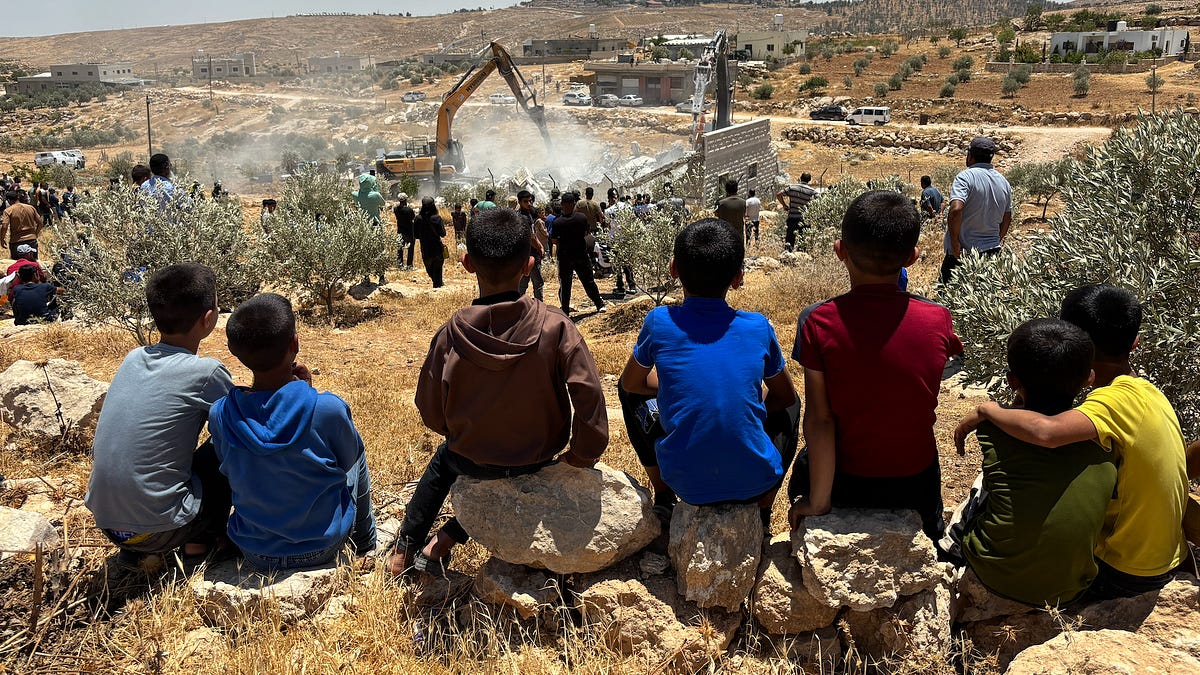
A Hellish Month in the Occupied West Bank by Jasper Nathaniel
The story, at the most basic level, is that the settlers have seized more land. With the full support of the government, they have just about finished their takeover of Area C and have moved on to Areas A and B—ostensibly under Palestinian Authority control and off limits to Israelis—something that would’ve been unthinkable just a few years ago. Villages that had never seen a settler before are now finding themselves encircled by outposts, facing daily attacks.
I’ve had countless settler encounters over the past several years, but never have I seen them come out swinging the way they are now—showing up in a village and wasting no time before physically assaulting people. Of course it’s because they know that they are far more likely to be rewarded than punished; they are, after all, doing the state’s bidding.
There are stories I want to tell about the courage of Palestinians—men, women, and even children—whom I watched fend off settler attacks, resisting the occupation with whatever they could find. They are brave because they have no choice. But I can’t tell those stories without risking their lives. This is a riddle about writing on Palestine I haven’t yet solved.
…
In Bethlehem, I met Fahed Abu Haikal, whose seven-month-old son Sam was shot dead by an Israeli soldier weeks earlier while sitting in his mother’s lap inside the family car. Fahed remembers everything. He remembers the soldier’s nonchalant expression as he raised his weapon toward the car’s windshield. He remembers slamming on the brakes, then watching the soldier pull the trigger—the first bullet shattering the windshield, passing through his hand, into his baby’s face, out the back of his tiny head, and then into his wife’s face and chest. He remembers pulling Sam from the car and trying to plug the hole in his head as thick, hot blood poured out, before realizing he was holding his dead child. The car seat is still stained a dry, crusty brown. When Fahed got home from the hospital, the first thing he did was disassemble the crib and hide the parts, along with Sam’s box of toys—including the rattle he was holding when he was shot in the face—so his wife wouldn’t have to see them when she returned home.
…
Then he showed me a photo of his son’s corpse. This is a common occurrence in the West Bank: someone showing you a picture of their dead child.
A Hellish Month in the Occupied West Bank
Inside a month of relentless violence, destruction, and suffering.
Nonviolence in the Age of Genocide by Sami Awad
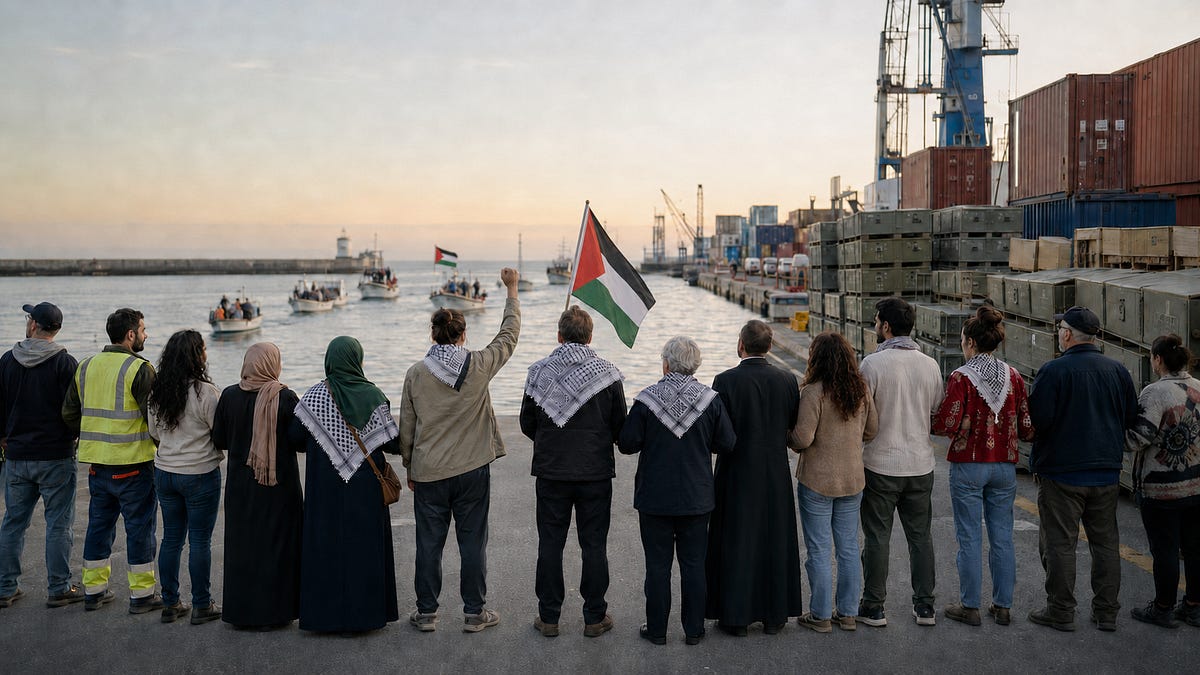
But his work was not an isolated moment. Palestinians have engaged in direct nonviolent action for generations. From the 1936 general strike to the boycotts, tax resistance, local committees, and mass mobilizations of the First Intifada to village campaigns against land confiscation and the separation wall, Palestinians have repeatedly practiced noncooperation and direct action.
These movements were not embraced or protected by the international community. They were suppressed, first by the British colonial authorities and later by the Israeli state and its occupation forces. Organizers were arrested, beaten, deported, and sometimes killed. Demonstrations were attacked, and community organizations were closed.
At the same time, the international community continued to promote a watered-down understanding of nonviolence as dialogue, negotiations, peacebuilding, reconciliation, kindness, and open-mindedness. These may all be important, but they are not in themselves nonviolent resistance. When nonviolence involves noncooperation, disruption, boycotts, and the withdrawal of power, it is suddenly condemned as too confrontational or dangerous. Even when Palestinians adopted this watered-down version of nonviolence, the structures of occupation remained protected and unchanged.
So when Palestinians are asked why we did not choose nonviolence, I want to be clear: we did. We chose it again and again, not because you wanted us to, but because we knew what was best for us and for our struggle. What was missing was not the Palestinian commitment to nonviolence. What was missing was the international community's willingness to apply real pressure on the system we were resisting.
So when Palestinians are asked why we did not choose nonviolence, I want to be clear: we did. We chose it again and again, not because you wanted us to, but because we knew what was best for us and for our struggle. What was missing was not the Palestinian commitment to nonviolence. What was missing was the international community's willingness to apply real pressure on the system we were resisting.
Today, as Gaza endures genocide, we must ask what nonviolence means when the conditions needed for organized action have been destroyed. What does direct action look like when universities, hospitals, community centers, families, and civic institutions have been devastated? What does collective organizing mean when gathering can make people targets, communication is constantly disrupted, and survival consumes every remaining ounce of energy?
Under certain conditions, sustaining life itself becomes an act of nonviolent resistance. Feeding a family, treating the wounded, teaching children in a tent, caring for an orphan, documenting a crime, sharing the last water, or refusing to abandon one’s humanity can all become acts of resistance.
This does not mean that survival and resilience are always nonviolent actions, and we should never romanticize Palestinian suffering. Palestinians should not have to endure endlessly so that the world can praise our resilience. But when the goal is erasure, sustaining life becomes resistance.
Nonviolence in the Age of Genocide - Sami Awad
When those under attack cannot organize direct action, the responsibility for resistance shifts to those sustaining the violence
My Typical Day as a Teenager in the Box on Rikers Island by John Katehis
How’s that for a sentence that should be eliminated from a society?
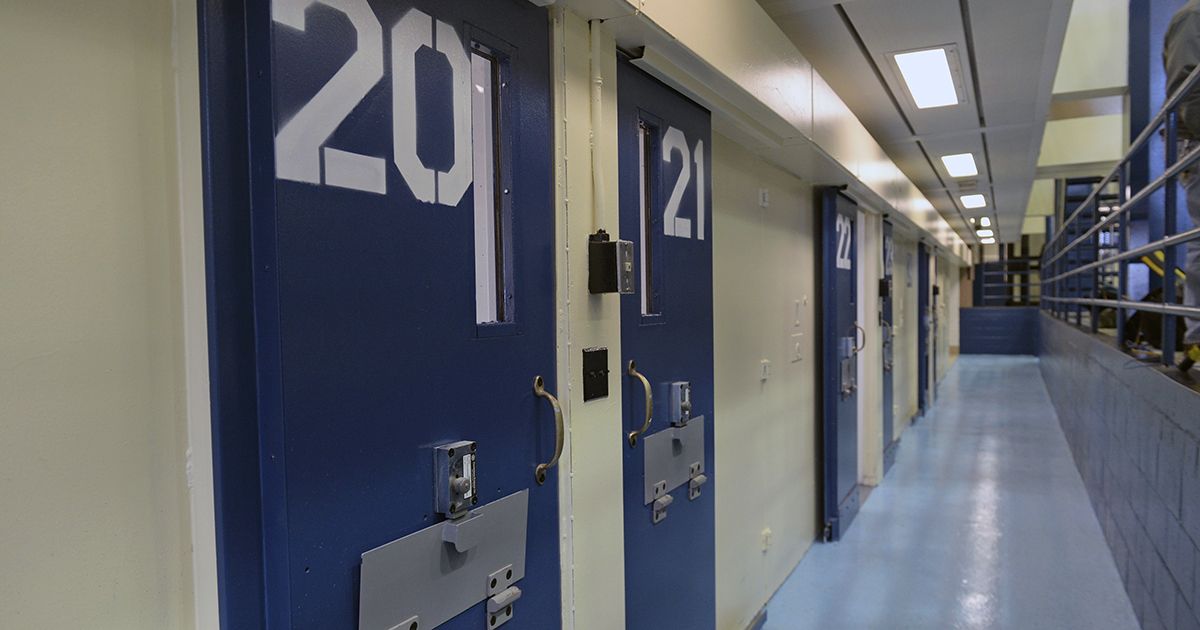
In this essay from a new book edited by Elizabeth Hinton and Elsa Julien Lora, Harm and Punishment: Incarcerated Writers on Violence and the US Prison, John Katehis describes the nightmarish conditions he faced in solitary confinement in Rikers, where he was sent as a 16-year-old in 2009. Hundreds of thousands of others had similar experiences at Rikers, before and since; their accounts helped to spur the ongoing fight to close the prison.
…
11:00 p.m. and late into the night. The conversations become more localized. We go from screaming between 12 people to loudly talking between four to lightly speaking to the one person on the other side of the vent, and the conversation becomes more private and truthful. Friends are made, and our suffering is shared. At some point way late into the night, the cell lights are shut off, and I lie down to sleep. One hundred seventy-nine more days to go.
My Typical Day as a Teenager in the Box on Rikers Island
A magazine of Black politics and culture
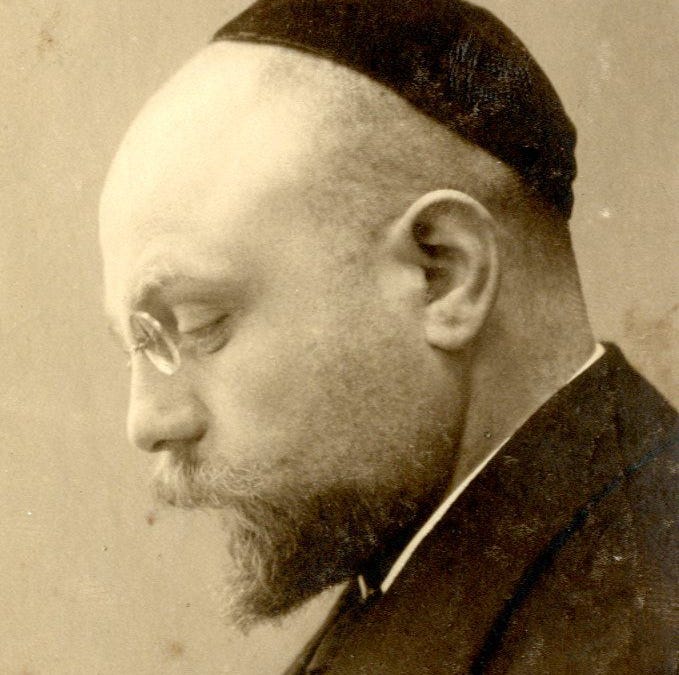
The Hate at the “United Against Hate” Jewish anti-Mamdani Rally, NYC, Sunday July 26: A First-Hand Reflection by Shaul Magid
The rabbis said that the Second Jerusalem Temple was destroyed because of “baseless hatred” (sinat hinam). But they buried the lead. The lead is that baseless hatred in its time is always viewed as justified hatred by those who spout it. No one thinks they are engaging in “baseless hatred.” Therein lies the trap.
…
How much of the anti-Mandani movement is itself a deflection away from what is happening in Gaza and the West Bank today? That is certainly a matter of conjecture and enters a kind of psychologizing that can be speculative and spurious. But it is also not implausible, especially here. Literally 24 hours before the rally, Jewish West Bank settlers burned down at least two mosques, destroyed numerous villages, including homes and farmland, and killed nine Palestinians. Two Israeli soldiers were killed, one of them by friendly fire. Thus far, only two Jewish settlers have been detained by the police while dozens of Palestinians have been arrested from various villages.
Thus, at least three pogroms happened in the West Bank within 48 hours before the rally. Of course, none of this was mentioned, even the word “Gaza” was not mentioned except to claim that anyone who says Gaza was a genocide is a fool and/or an antisemite. Literally, the West Bank was burning with hatred and violence, settlers running roughshod over Palestinian civilians under the protection of the IDF, and in NYC’s Upper West Side, Jews were spewing hate for the mayor for not protecting them from a crime he firmly denounced.
The irony of course is that the Jews who are really threatened are those most identifiable as Jews—that is, those anti-Zionist Haredi counter-protesters across the street, not the Jewish woman in a T-shirt, jeans, and aviator sunglasses among the anti-Mamdani protesters. But those haredim, who were also the target of hate, not of Mamdani but of their fellow Jews, those “enemies” of “the Jews” who were “probably not even Jews, but paid actors” were not afraid to walk in the world as Jews. How could a “real Jew” think that way, a protester asked? They must be imposters. But of course, agree or not, Jews have thought that way for a long time. But how would they even know? They couldn’t. And therein lies part of the tragedy of the Jews today.
The Hate at the “United Against Hate” Jewish anti-Mamdani Rally, NYC, Sunday July 26: A First-Hand Reflection
When anger turns to hate it knows no borders: The impermissible becomes permissible
Iran Has Figured Out How to Overwhelm U.S. Air Defenses by Nick Turse
As munitions streaked through the night sky, a plaintive cry like a whale song echoed in the darkness. U.S. troops grabbed their gear and headed for shelter as the warning sirens rang out, a leaked video shows.
The military personnel, clad in a mix of combat fatigues and gym attire, piled into a bunker, huddling in the darkness. “Guys, off the walls if we can,” a woman, likely a medic, advised, warning about the danger of traumatic brain injuries.
The footage, reportedly from Jordan’s Muwaffaq Salti Air Base, where three U.S. troops were killed during Iranian ballistic missile and drone attacks on July 17 and 18, offers a glimpse of the dangers faced by U.S. forces across the Middle East.
The attacks are continued demonstrations of Iran’s ability to target U.S. bases across the Middle East and kill U.S. troops, despite months of claims by President Donald Trump and self-styled War Secretary Pete Hegseth that Iran’s military was annihilated.

Iran Has Figured Out How to Overwhelm U.S. Air Defenses
As the U.S. runs short of interceptor missiles, Iran is carrying out strikes with a mix of attack drones and advanced ballistic missiles.
I See My Father in the Fathers Killed by ICE by Ingrid Rojas Contreras
One video published by The Bangor Daily News shows agents pulling his unmoving body out of the driver’s seat—then handcuffing him. It is unclear if he is alive. I wondered how much fear must have been in the minds of those ICE agents that they felt the need to still restrain him.
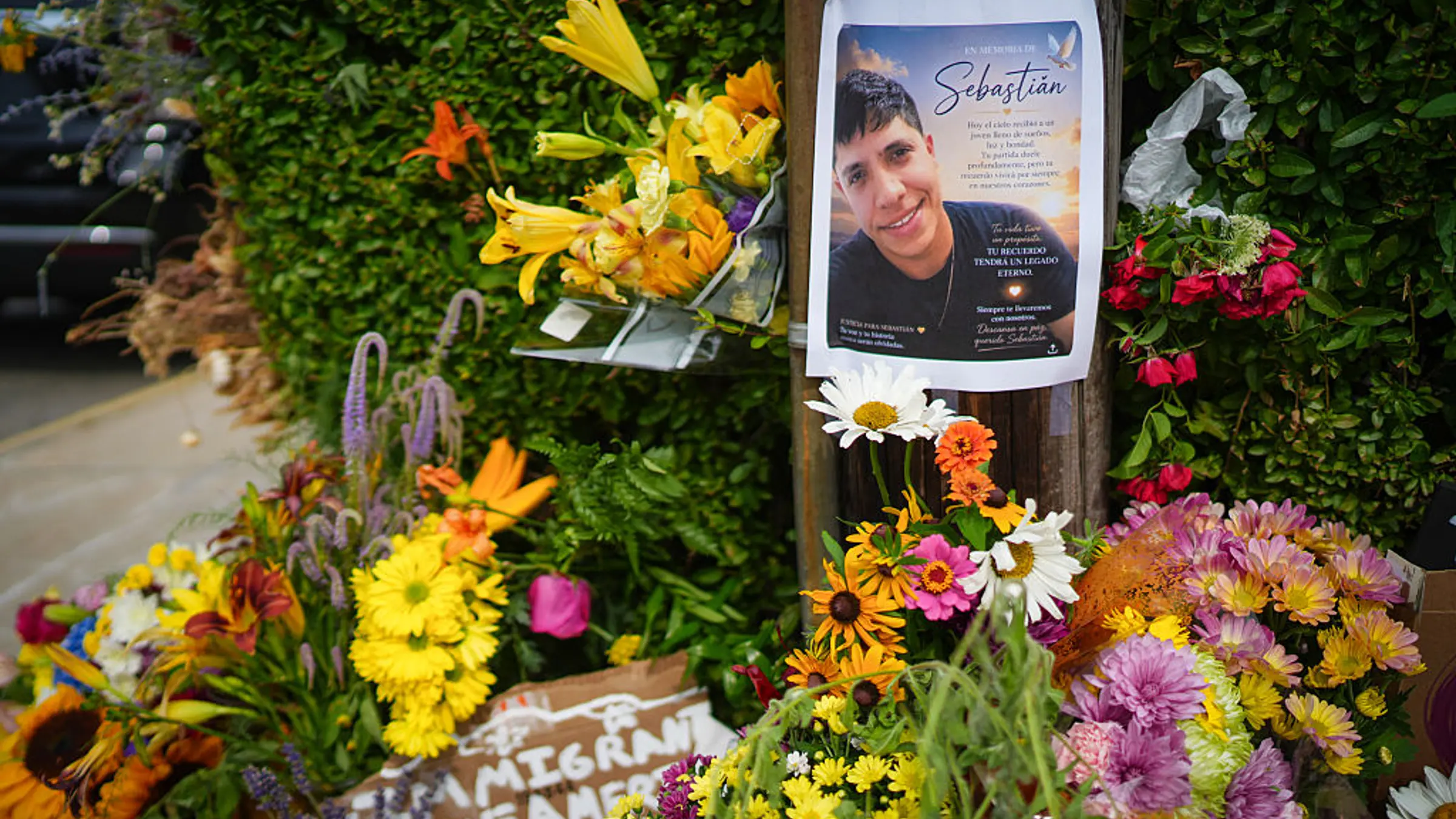
Just six days earlier, Lorenzo Salgado Araujo was killed by ICE agents in Houston, this time shot through the passenger window. The ICE agents were in an unmarked vehicle, and though they said they were in pursuit and their emergency lights were on, a video shows they were not. Salgado was dead within minutes.
As a Latina, it is impossible for me not to see my father when I think of Guerrero and Araujo. In them, I see men who wanted nothing but a better life for their children. Families like mine can’t help but feel their families’ pain, and fear for each other and our own.


Add a comment: