
Things I'm reading
Things are never "the same" on the left and right, even if they are pushing the same policy
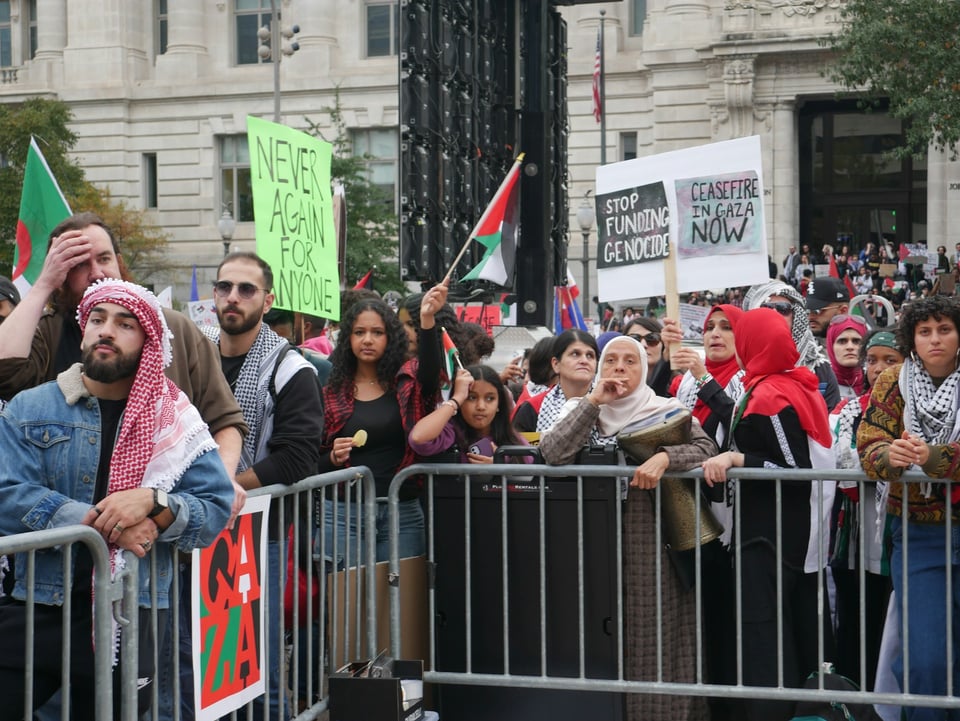
In the piece below, Sam Avraham nails the situation with the rise of antisemitism and how it’s being maliciously misattributed to “both sides” by multiple different groups for multiple different purposes.
There is growing antisemitism in the US and the rest of the West, overwhelmingly from the far-right, which is also attempting to co-opt the Palestinian solidarity movement.
This is excellent framing and explanation of what we are seeing. There is not and “equal threat of antisemitism on both sides, left and right.” On the left, there is earnest, well informed, consistent, and thoughtful desire to hold a military, a government, and ethno-supremacist culture accountable for ongoing genocide. Accountable for ethnic cleansing. Accountable for a project of dehumanizing an entire people to attempt justify decades of crimes against humanity.
On the right there’s a long standing tradition of othering and bigoted hate that aligns with latent antisemitism to produce conspiracy theories, khaki and white torch rallies, and both the threat and very real occurrences of antisemitic violence.
These things are not the same.
On the right, many of the tropes and stereotypes find purchase because the people hearing them don’t have Jewish friends, neighbors, nor family members in their inner circles, often out of choice. On the left, many being declared antisemitic are Jewish themselves, determined to not allow their history, culture, and religion to be tarnished, if not destroyed, by extremists.
On the right, the White House platforms people who question whether Jewish Americans can be truly loyal to the empire. Those who choose political expediency over Jewish safety. Those who downplay the Holocaust while endorsing the modern day equivalent. The majority of Zionists in the US, Christian Zionists, only support Israel and Zionism because their anti-Jewishness demands the consolidation of the Jewish people to allow for their conversion under the threat of destruction, according to their fictional sacred texts.
On the left, the “antisemitism” is making the assertion that Palestinians are humans, just like their Israeli or Jewish neighbors. Those invoking the legal definition of genocide are told they are actually calling for a second genocide of Jews, the avoidance of which the very definitions were created to protect against.
Democratic electeds claim to abhor violence, yet they stand by silently as settlers lay violent siege to West Bank villages. They, belatedly, acknowledge that without US weapons, Israel could have never started, much less continued, an almost 3-year-old, ongoing genocide. Yet they do nothing to stop that flow of weapons.
Ultimately it is the creap of nihilism into the leadership and elected officials on the left that drives the risk of aligning with the other beliefs of the far right. We are told we must elect these chosen candidates to stave off the worst case scenarios. But then those elected officials lose their convictions and point tot complexities, or flexibility to make deals across the aisle. But when the institutional left cannot stand on moral and ethical principles it becomes less and less clear what distinctions they enforce to separate themselves from the right.
But that flattening has never been true at the individual level. Leftists are racists offloading from box trucks wielding signs and chants featuring slurs at protests, rallies, or vigils. Leftists are not endorsing violent attacks to advance their political goals. Leftists are not pushing to attack and subjugate any number of “others.”
Because the overall principal of the left is to lift people up. To support the equal and shared humanity of all of our neighbors. Even the Black and brown ones. Even the ones “from the river to the sea.” Because as long as we invest in and support ethnic cleansing, oppression, and occupation at home and abroad, we put everyone at risk. When you draw any lines to exclude people from our shared humanity, you’ve already lost.
The risk is not that Tucker Carlson, Candace Owens, and Nick Fuentes are welcomed into the Democratic Party, no matter how large of a tent one might wish to construct. Their views are abhorrent and that’s clearly visible, in fact it’s why they gain the support they have on the right. The risk is that Carlson continues to gain traction amongst Republicans, some of whom morally oppose the actions of Israel, but too many of wouldn’t blink while supporting Carlson blaming Jews from the White House podium, and inciting antisemitic violence.
Your opponents adopting your policy positions isn’t a problem. It’s actually the whole point of politics. The problem is if you then allow those people to influence the process of redefining your other positions. You can’t give them power because they agree with you on a narrow piece of policy, without giving any thought to the reasoning behind their choices.
Subscribe so you can get my posts directly to your inbox, avoiding dependence on social media, which benefits both of us.
Reading
On Antisemitism and Bad Practice by Sam Avraham
We do not need to engage in conspiratorial thinking about Israel when the reality is sufficiently horrible. I (obviously) will continue to speak out against antisemitism as a form of bigotry that harms me and all Jews specifically. Additionally, antisemitism in our movement hurts our cause, both for the specific reasons I ranted about above and because I believe all liberation is intertwined. Liberation for all; free Palestine.

On Antisemitism and Bad Practice - by Sam Avraham
My thoughts on antisemitism and bad political analysis in the left, and the Venn Diagram of those two things.
Why Gaza is the moral issue of our generation by Jonny Rashid
With that said, candidates and advocates must be careful not to ally with antisemites like Tucker Carlson, Candace Owens, Alex Jones, and Nick Fuentes. Criticism of Israel is not inherently antisemitic, but these figures are careless with their criticisms to the point of being guilty of antisemitism. Moreover, the Zionist and Christian Zionist tendency to conflate Israel and Jews endangers Jewish safety. When Zionists insist on conflating the two, outside observers fall into the same trap, and then irresponsibly burden Jews with Israel’s war crimes.
Distancing ourselves from right-wing, antisemitic critics of Israel is essential. Not taking the Zionist bait is also crucial. More than that, however, it is important that independent of these bad actors, we also do not engage in antisemitic tropes. The primary caution I want to offer is to make sure we do not oversize the power of Israel and AIPAC over U.S. foreign policy. Tropes that suggest Israel is controlling Donald Trump, leave Trump off the hook for his own interests and asinine actions. Further, AIPAC does not fund candidates in order to convince them to support Israel; rather, they fund campaigns of Israel’s supporters running against Israel’s critics. AIPAC and Israel don’t control candidates or policy, but they reward their supporters. In other words, they act like any other nation-state or lobby group. The call to not take AIPAC funding is not as strong as simply supporting candidates that criticize Israel, want to limit aid to the genocidal country, and name the genocide as the fact that it is.
The genocide in Gaza is the moral issue of our generation. One reason that candidates are campaigning on it and succeeding is because of the moral clarity it generates. If you listen to these candidates, they are hardly one-issue nominees. They are concerned with capitalist overreach, want to hold Trump accountable for his crimes and misdeeds, advocate for health care for everyone, and want the world to be safer for everyone: immigrants, queer people, and other vulnerable populations. Such a world is much more possible, though, if the U.S. does not continue to commit billions of dollars to fighting wars and advancing genocide. The truth is as clear as spotting a seahawk characteristically singing its unmistakable call.

Why Gaza is the moral issue of our generation
Yes, Israel is committing genocide in Gaza. Naming that fact showcases moral clarity.
The End of the Nazi Taboo by Daniel Bessner
Between the 2000s and '2020s, Nazi symbology was confined to the fringiest of the far-right fringe. But in recent years, the Nazi taboo has weakened. Elon Musk made a Nazi salute at a Trump inauguration event; Kanye West released a song titled “Heil Hitler”; far right provocateur Nick Fuentes has described Hitler as “really fucking cool” ; and the Holocaust denier Darryl Cooper appeared on Tucker Carlson and Joe Rogan’s very popular shows.
…
Of course, antisemitism existed in America, but it was never a key feature of national policy. Jews were excluded from numerous elite professions and private associations, subject to quotas at Ivy League universities, and regarded by the WASP elite as socially undesirable. Exclusion, instead of violence, was the most common form of antisemitism in the United States.
Sometimes Jews did fall victim to violent attacks. The Ku Klux Klan, in particular, adhered to the same kind of conspiratorial antisemitism that inspired Adolf Hitler. The Klan experienced a serious revival in 1915, partly as the result of the lynching of Leo Frank, a Jewish businessman accused of raping and murdering a white girl named Mary Phagan. This “second” Klan, unlike the Reconstruction-era “first” Klan, was explicitly antisemitic. Nevertheless, the actual terror the Klan wrought on Jews was negligible compared to the murders, lynchings, intimidation campaigns, and bombings that characterized its crusade against Black Americans.
Thus, while antisemitic violence was a feature of American life, it was never structural in the sense that anti-Black and, earlier, anti-Indigenous violence was. This was reflected by the fact that few Americans supported Hitler and his Nazi Party.
…
And, where Americans in the past might have found succor in the wages of empire, believing that U.S. military power made the world a better place, few believe that today. After decades of failed Middle Eastern interventions and years of genocide in Gaza, younger Americans can no longer cling to the promise of American global “leadership,” or even American global competency.
As the liberal consensus dissipates, the artificial left-right divide that has structured American politics for almost a century is likewise coming apart. And as the latter frays, ideas, movements, and symbols previously relegated to the fringe have started to gain traction in the mainstream. Some of these ideas are good, like government-run grocery stores. A lot of them are bad, like Holocaust denial.
Today, American politics has no center. Every soothing piety is suspect, every promise that “we are so back” is bullshit. In a moment when it’s easier to imagine the end of the world than it is to imagine the end of capitalism or imperialism or, really, anything that structures modern life, it’s not especially surprising that a number of young Americans simply do not feel the visceral revulsion toward Nazi (or, admittedly, communist) signifiers like their predecessors used to.

The End of the Nazi Taboo - by Daniel Bessner
The cultural consequences of liberalism's collapse
Trump 'Low-Key' Admits Defeat in Iran by Spencer Ackerman
Now we've properly arrived at the Iran Forever War. Trump has, for now, opted against returning to bombing Iran, a decision compelled by his dire shortage of interceptors and precision missiles. When he was threatening a return to the bombing, Iran let the oil producing states aligned with the U.S. know that if the bombs started falling again, the basis of their economies would burn. Their pressure did the rest.
The Iranians, whose post-assassination leadership transformations have predictably and understandably favored the hardest of hardliners, further informed the administration that there will be no reopening of the Strait of Hormuz until the United States meets their terms, which include reparations for starting the war. Trump is trying to hit them with an Uno-reverse move on the reparations—these are terms Trump cannot accept, after all—in an echo of the naval blockade around the closed Strait.
Lacking a military mechanism for compellance, Trump's latest approach, to leave the Strait closed until something changes, is to, as Nixon once said about Allende, make the Iranian economy scream. The thing is, Iran (the leadership, that is; the people suffer) has learned to adapt to nearly two decades of expansive sanctions. The U.S., however, has not had to adapt to the persistence of gas being 35 percent more expensive than it was before the war. Policy Tensor has an interesting piece about how the U.S. can pull out a victory here, but it's predicated on oil remaining at $90 per barrel. At no point during the post-9/11 wars have Americans been personally exposed to such unceasing higher energy costs. Much of the Cheneyite logic behind military domination in the Middle East was about preventing precisely this.



Add a comment: