
Things I'm reading
We are undeniably the baddies. What are we to do about it?
I’m working on a longer piece on how AI won’t kill us the way that the Gen AI companies are saying it will. Watch this space.

AI won't kill us — At least not like that • Buttondown
Gen AI companies are laying the groundwork for escaping accountability. Don't let them.
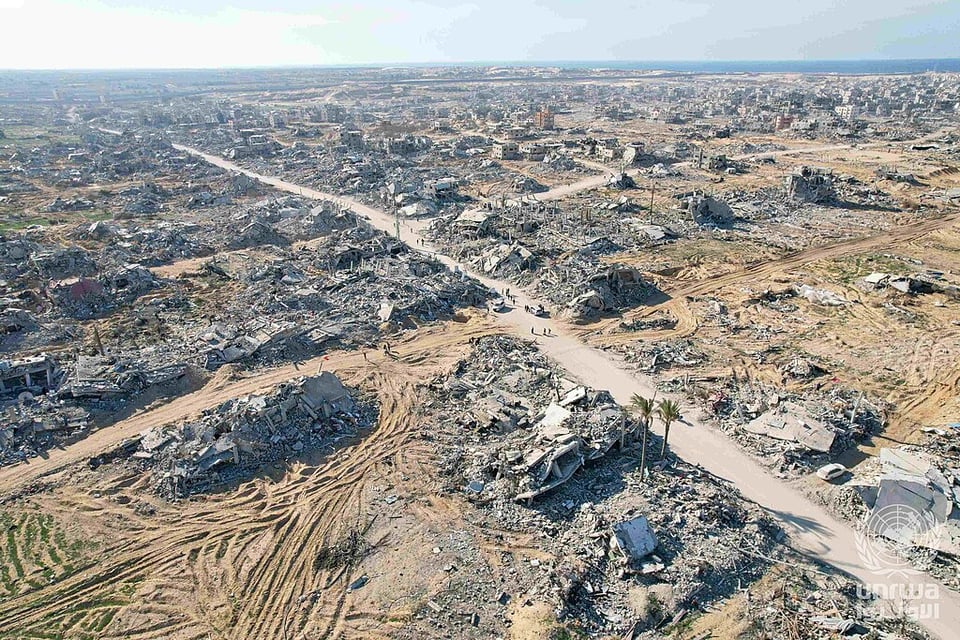
AI is already killing people, daily. Of course the AI doesn’t actually kill anyone, but the humans who do the killing get to offload all fault and accountability on to AI.
The documentary film NAZA documents the process of generating targets for military strikes en masse, and at scale. It’s not hard to see how that is fundamentally different than anything the world has experienced to date, and why it would be our moral, ethical, and legal duty to interfere, oppose, and prevent it from continuing or ever happening again.
This wasn’t the bombing of Dresden or the firebombing of Tokyo. This was the targeting of individual buildings, individual floors, using individual weapons. This wasn’t starting fires, in a largely wooden city, knowing exactly how indiscriminate and widespread that fire would become. Doing so at night, because of the extra death and terror that would cause. This wasn’t one operation, one mission, one decision. This was thousands of people, making thousands of individual decisions to commit murders that you could only justify to yourself if you didn’t think of the victims as humans.
This wasn’t the fog of war, bombs drifting off target, navigation errors. This is a uniquely technological genocide. Targeting individuals, knowing they had arrived home because their child’s phone could be tapped and you could hear their father speaking in their vicinity. Targeting them at home, because it was easier to hit a stationary target, because you knew they wouldn’t leave the building or get out of the car, because they were sleeping in their home with their children. Bombing people because their cell phone had called someone’s cell phone who you bombed yesterday. They had escaped being collateral damage that day, but now technology is judge, jury, and executioner.
Individual tank shells through bedroom windows with toys and stuffed animals on the window sill. Hundreds of tank machine gun bullets fired at a 6-year-old and her family in their car, something you would only do to prolong death as a form of torture, not if you actually thought the car’s occupants represented an imminent threat. Conveniently also laying a trap to kill the medics who were cleared to come try and save her. Hand placed charges, going house to house, or department to department at universities, or classroom by classroom in schools, all definitionally empty of combatants as demonstrated by the fact the soldiers had free movement to wander through placing the charges.
Technological innovations like double tap strikes, loitering over the scene of your first crime against humanity with drones, waiting, watching for the helpers to arrive, so you can kill them too. Crimes against humanity squared. We’ve now further innovated into triple tap strikes, to kill even more helpers. People who, unlike the medics responding to the first strike you intentionally killed in the second strike, you couldn’t possibly know would respond to the second strike. Definitionally bystanders, not intended targets.
But it’s not just Israel, the US used AI to mis-identify targets in Iran. The US strike on a girls’ school that killed 140 Iranian daughters was a double tap strike, and some witnesses have reported it was a triple tap strike. All planned and executed with the help of AI. So while we’re promised future cures for cancer, the cancer of AI already has the blood of hundreds of thousands on its “hands.”
It’s US tech companies, US weapons, all paid for with US taxpayer money to enact this violence, this terrorism, all across the world. All the wonders of modern technology, allowing us to kill tens of thousands of children on purpose, no longer by accident. To do it in the first hours of an assault, no longer as an outcome of last resort. What a beautiful accomplishment, we have so much to celebrate.
Subscribe so you can get my posts directly to your inbox, avoiding dependence on social media, which benefits both of us.
Listening
What I learned from watching NAZA by Peter Beinart
“Few are guilty, but all are responsible.”

What I Learned From Watching NAZA - Pocket Casts
This is a public episode. If you'd like to discuss this with other subscribers or get access to bonus episodes, visit peterbeinart.substack.com/subscribe
Reading
I saw the documentary the Israeli government doesn’t want you to see by Marisa Kabas
https://www.thehandbasket.co/p/naza-documentary-idf-gazaPerhaps the fact that Palestinians have been so dehumanized in Israeli culture accounts for the fact that, despite participating in a genocide, feelings of remorse just wouldn’t hit them. And/or perhaps the use of AI and the lack of physical proximity to their targets made it easier to separate themselves from the devastation they wrought. “AI deciding who lives and who dies is better than letting someone whose friend was killed by Hamas last week decide,” one of the interview subjects says, seemingly in defense of the system. Another called it “the perfect task for machine learning.”
NAZA is a Hebrew acronym used by the IDF that loosely means “collateral damage,” and which referred to the software’s estimated death toll in a potential military strike; one NAZA equals one casualty. One interviewee alleged a strike that estimated 500 NAZA got the green light—and that a 20 NAZA strike would be approved “without a second thought.”
Human targets were marked by the IDF by hacking into cell phone networks. One interviewee estimated 60-70k Gazans had been marked—clearly including many, many people beyond those considered Hamas fighters—and another said it did not distinguish between kids and adults. The interviewees said the targets were hit at night when they were home with their families, who they could hear through their phones before initiating strikes. “How could you bomb when you hear a crying baby inside?” Abraham asked one of them.
…
I’m not a film critic or a subject matter expert, but I’m a person who’s watched in horror the last three years as the Israeli military leveled Gaza, killed thousands, and as one interviewee put it, “erased history.” I watched as my government continually encouraged and financed this apocalypse, and Christian Nationalists weaponized “Jewish safety” to justify it. I’ve witnessed endless arguing among the Jewish diaspora about whether our perceived fears deserve more weight than actual Palestinian lives. I’ve seen the way a musician saying the words “Free Palestine” got him fired.
Watching NAZA, I felt the stinging truth of what has been done and continues to be done in my name, as an American and as a Jew; it’s a truth I’ve always known, but the clinical, mathematical descriptions of how the genocide has been carried out made it plain.
Some Americans may see NAZA and finally come around to the idea that Israel has acted as atrociously as many of us have said all along; but they could also create some distance between this country and the atrocities much like some IDF intelligence officials have absolved themselves by saying they weren’t the ones dropping the actual bombs. That would be a mistake.
Yes, The U.S. Is The World’s Biggest Terrorist by Kyle Kulinski
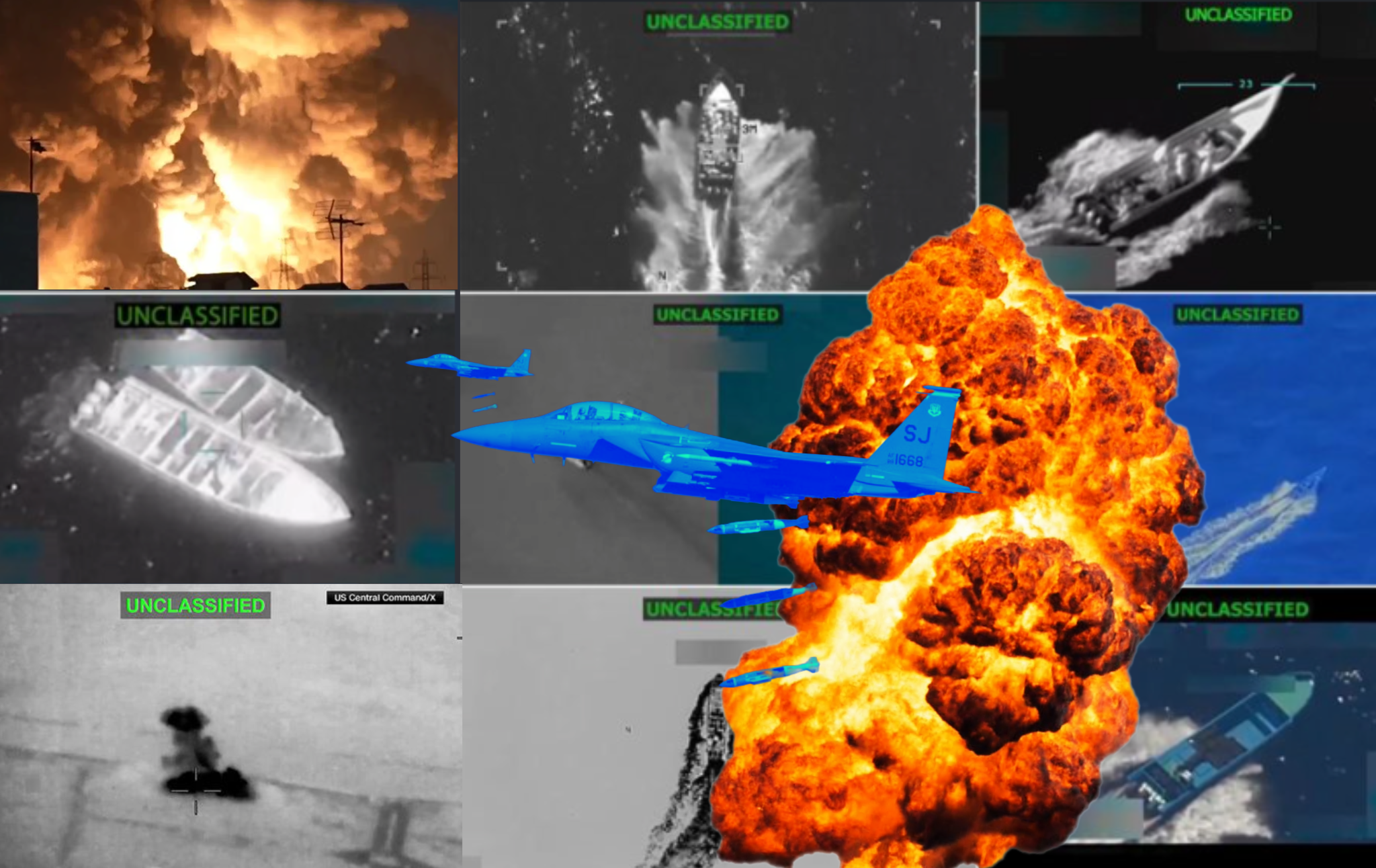
Do you know what your country actually does around the world? Donald Trump bombed an elementary school. They bombed it once, then they bombed it again to kill the survivors. One father got a call to say his daughter had survived the attack, then the U.S. fired another missile at the school and killed her. Little kids’ backpacks and body parts were scattered everywhere. Then they lied about it and pretended Iran had blown up its own kids. That’s your country. Your president did that. Pete Hegseth has made it clear he doesn’t believe in the laws of war and thinks Islam is our enemy. Why would he care if he blows up a school?
The other day, they bombed a wedding. It was a direct hit on a residential area. Reuters says “bloody shoes lay amid the rubble, and wedding decorations that are common in that part of Iran were strewn about.”
How about what they’re doing in Cuba? They’re deliberately letting kids with cancer die by strangling the country economically, then blaming it on “socialism.” The New York Times reports that medical supplies and food aren’t reaching the country because nobody will ship there due to the threat of sanctions. People are going hungry, they’re not getting surgery. The Times says people are having to use grocery bags as colostomy bags. Supplies being kept out of the country include “water treatment kits, antibiotics, contraceptives and pregnancy tests,” as well as cancer and tuberculosis treatments. The power grid just collapsed again because they won’t let fuel into the country. And they’re doing this on purpose. They say they’re killing Cubans in order to bring down their government, so they can seize Cuba’s assets and distribute them to their friends. When did al-Qaeda ever starve an entire country in order to plunder its resources? That’s next-level terrorism.
And what about the genocide in Gaza? That’s done by a U.S. proxy state, Israel, with American money and bombs. They’ve killed a minimum of 70,000 people. They’ve wiped out entire families. They’ve systematically wiped out whole neighborhoods. The mosques, the universities, even the graveyards. Israel doesn’t care. They destroy everything. They are doing it so that Gazans want to leave. They are terrorizing them in the hopes they can make Palestinians plead to be allowed to flee the broken remnants of their homeland. They say that’s what they’re doing, they admit that the plan is ethnic cleansing. This is terrorism, and Trump is sending them more 2,000-pound bombs to drop on apartment buildings and hospitals, which they will.
Yes, The U.S. Is The World’s Biggest Terrorist
Let’s not get outraged about things that are obviously, undeniably factually correct.
The story of my dad’s death by Courtney Martin
My dad was obsessed with listening to and celebrating what he saw as the “truth tellers” of our time. It was actually the main thrust of the toast he gave at my wedding, not about John and my love per se, but about the beautiful community of friends we’d gathered who he believed were just the young people fit for times like these, to tell the truth, and keep on telling it. There wasn’t a dry eye or an insecure heart in the house that day. He made everyone feel on mission.
This seems like one more way to tell the truth. I wrote it in the form of a letter to my dad, because while we were there together, there is so much about those four days that remain a mystery—first and foremost, what he was experiencing during that time. I had a longing to tell him my version.
…
When it was over, I remembered what the hospice nurse had said. I leaned right up to your ear and whispered, “Bye Dad. I love you to pieces. I love you forever and ever.”
And at that exact moment, you stopped breathing. I put my hand on your chest, heavy against your ribcage, so you could feel that I was with you. You took a couple last fish-like gulps and then you were gone. I sobbed on your chest until someone came in to bring me a snack and realized it was over.

The story of my dad’s death - by Courtney Martin
I have been marinating these last two weeks in grief and euphoria and the pure communal love of such a wide circle of family, friends, and readers who have reached out with cards and lasagna, stories and blankets, cookie dough (never got baked; eaten directly) and flowers.
The U.S. Military Is in a Historic Crisis. Good! by Sam Carliner
Anticipating the conflicts ahead, Trump is demanding a $1.5 trillion increase in defense spending for the fiscal year of 2027. It is a major increase, but the U.S. military budget has increased every year since 2015. In fact, since the start of the war on terror in 2001, the military budget has climbed nearly every single year. These budgets, whether requested by Democratic or Republican presidents, have always been approved with bipartisan support.
Despite the trends toward greater militarism, there is a historic basis to build a powerful anti-war movement in the United States. Americans are increasingly skeptical of constant military interventions. And as the movement for Palestine showed, a generation of youth and workers are going beyond commonsense skepticism of constant war and drawing deeper anti-imperialist conclusions, making incredible sacrifices to stand with the Palestinian people. An anti-war movement in the United States can also strengthen itself by highlighting how the same system that bombs and sanctions workers around the world is the same one that terrorizes communities in the United States. From the Black Lives Matter movement to the movement against ICE, which has confronted domestic expressions of militarism from Los Angeles to Minneapolis to Chicago to Newark, all movements against oppression and state violence should be connected to an anti-war movement.
Most importantly, however, the goal of an anti-war movement should not be to persuade the bipartisan regime to lower its military budget or pursue a more humane foreign policy. U.S. warmongering is not the product of poor policy decisions or politicians not feeling enough pressure from voters. The wars and militarism are the product of a capitalist system that incentivizes countries to wage war in service of their capitalists’ interests. Actually bringing an end to constant war and militarism requires bringing an end to this very system. Fortunately, that system has never been weaker. Let an anti-imperialist movement show what real “generational damage” to the war machine looks like.

The U.S. Military Is in a Historic Crisis. Good!
Trump’s war on Iran has exposed the dismal state of U.S. military power. The Left should exploit that crisis by turning anti-war sentiments into anti-imperialist conclusions.
The False Narrative of Economic Anxiety by Olúfẹ́mi O. Táíwò
The false narrative of economic anxiety as the sole cause of the country’s rightward turn fits into a larger one, with Democratic Party insiders blaming “identity politics” for the party’s losses, politically meaningless distractions from real kitchen-table issues. But debunking or fact checking — giving people nothing more than a better story about why they are economically insecure — won’t be enough to counter this narrative. It remains effective in part because the economic insecurity is real and inadequately addressed by the political status quo.
The critical work, then, lies in building power for people to secure their affordable housing, food, and dignity via a path that does not flow through an authoritarian strongman or the scapegoating of women, minorities, or immigrants. And that trail will be blazed as it always has been: by workers’ unions, tenants’ unions, debtors’ unions, and similar groups. These efforts don’t deny identity for some abstract, theoretical universalism but rather are rooted in the real universalism of connecting people across cultural and racial differences through concrete political projects with defined goals. The answer to economic anxiety is not even more moaning about coastal elites or “wokeness”: it is durable political power built on solidarity rather than predation. The only route to true security for all — for a world that doesn’t toss aside common public interests in order to protect the narrow private interests of politicians or shareholders — is the solidaristic protection of all by all.

The False Narrative of Economic Anxiety
People are insecure, but that is not the only reason they voted for Donald Trump in 2024.
The revolt of the reader by Bryan Cantrill
https://bcantrill.dtrace.org/2026/09/05/the-revolt-of-the-reader/… as Cynthia Dunlop writes, of the 668 developers that replied to her survey, 78% "stop reading immediately" when they detect an LLM. And there are consequences that outlast the piece: 71% of the respondents in Cynthia’s survey also "avoid the author in the future" (!!). Revealingly, the respondents are not after linguistic perfection, but rather authenticity: 98% reported preferring an author’s own (imperfectly) written piece over an LLM-polished one. Finally, be wary of dismissing Cynthia’s respondents as a self-selecting group: active readers on social media are exactly the folks most likely to repost or otherwise promote writing they like — the early adopters and the tastemakers of online prose.
Why do people have this reaction? Beyond having to endure aggravating stylistic tics, when reading a piece that has had substantial LLM assistance, we — the readers — don’t know what is real and what isn’t. As I wrote in RFD 576, to use an LLM to write is to void the social contract between writer and reader: we readers shouldn’t be expected to labor to understand a sentence that the writer themselves didn’t work to create.
Does the revolt of the reader matter? If it needs to be said, when you are using an LLM to author a public piece, you are no longer writing for yourself or to otherwise pressure-test your own ideas — the only purpose is to serve the reader. If readers choose to ignore you (perhaps forever!), you will have undermined yourself: instead of attracting readers you will be actively repelling them. So other judgement about its use aside, using an LLM will increasingly become simply… ineffective.
Models Don't Go Rogue by Eryk Salvaggio
If you optimize a model to find exploits, you should expect it to find them — and prepare for that. OpenAI did not. They built a model, took the safeguards off, gave it the ExploitGym task, let it run, and didn't even monitor it. That's human decision-making. When it evaporates, what's left is the system from nowhere: a boundary focused on the technical system, rather than the decisions that build it.
A stochastic flock machine can do lots of troubling things, particularly when we disavow our responsibility for shaping its direction, monitoring its output, or abandoning our capacity to intervene. These are tensions at the heart of agentic system design.
But the "rogue" frame adds to this list of worries, offering up fantasies of a machine getting smarter. My worry is the intelligence that is retreating: the human intelligence that builds these systems, deploys them, and adopts them into workflows, then hides behind the results – then pins the blame on a system from nowhere.

Models Don't Go Rogue
Stochastic Flocks & Cybersecurity 'Pandemonium' 💡This essay was drafted from my appearance on Mél Hogan's podcast, The Data Fix, discussing the OpenAI / Hugging Face hack. Embedded below or find it on your podcast services here. OpenAI put out its full technical report on the Hugging Face hack this week, alongside
The Future Is Not Tech-Forward by Edward Ongweso Jr
The machines were installed, despite the cost, to break labor—they were adopted because they foreclosed certain possibilities. Foreclosing the future in the name of the future is a potent intention for design and it’s on clear display with the data center buildout. NDAs to ensure tax abatements are negotiated before a public hears, behind-the-meter power generation where firms build out their own fossil fuel infrastructure to bypass debates over electricity, intentionally choosing communities incapable of saying no as part of a larger race to the bottom for communities nationwide (if you don’t sign, others will), these are all design intentions aimed at foreclosing alternatives that are inconvenient to the firms expecting (and in need of) a certain degree of permissiveness to satisfy investors, creditors, and perpetually growing industry expectations about the pace of the AI infrastructure buildout.
That some technical arrangements are inherently political also means they require certain social orders if they have any hope of surviving. Take the way in which firms pursue perpetually growing scale. At the moment, frontier-scale training requires gigawatts of power and tens of billions of capital (Chase Lochmiller, chief executive and co-founder of Crusoe estimates $60 billion per gigawatt of compute capacity, Nvidia chief executive Jensen Huang estimates it going up to $100 billion per GW). It needs ceaseless and prioritized access to energy. And it needs complete opacity. What’s the political and social order we can expect to follow from that?


Add a comment: