
Things I'm reading
You are WHO you listen to
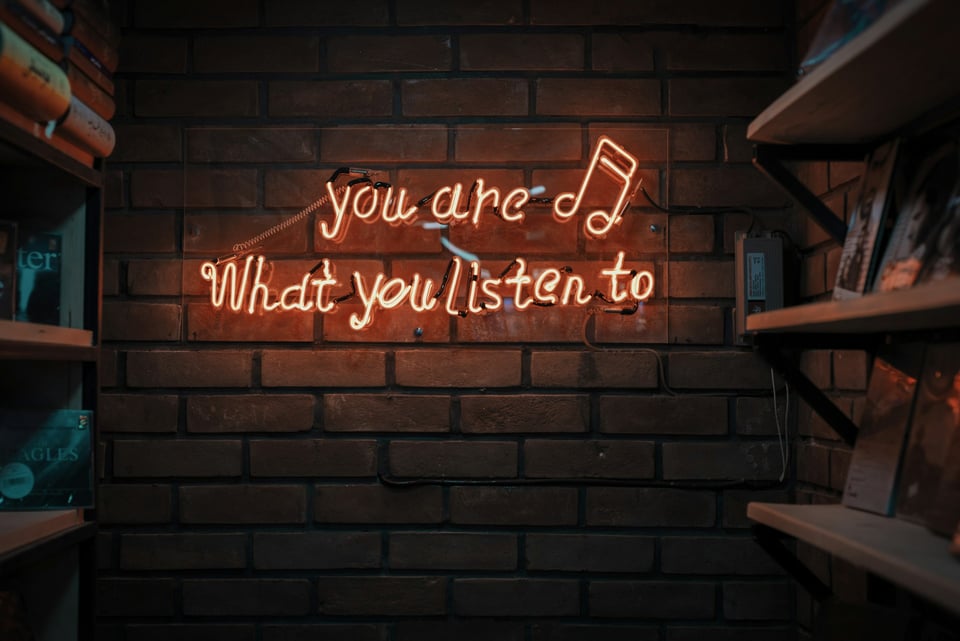
“You are what you listen to” or more specific to this post, “You are WHO you listen to.”
All I’ll say here because this isn’t about me or my thoughts, is if you’re listening to man-o-sphere voices about Cornell, rape, or women in general, you’re part of the problem.
Listen to women, believe women, amplify women or shut the fuck up.
Subscribe so you can get my posts directly to your inbox, avoiding dependence on social media, which benefits both of us.
Donating
I went to a talk in Maplewood, hosted by SOMA Justice, by a woman who described herself “proud anti-Zionist Jew” who is both deeply connected to Jewish religious practice and has recently been on a solidarity presence trip to the West Bank. It’s worse than you think, she used the term solidarity presence because more and more, there is no protection for Palestinians in the West Bank, not even the Jewish people putting themselves in danger.
But there are people really trying to do the work by putting their own bodies on the line. They have to do this because the violent, racist, Jewish Settlers don’t see Palestinians as human. It’s the presence of a Jewish person, even if they’re not Israeli, standing between them and Palestinians, that gives them a moment’s pause, which highlights that this is ethnic cleansing, based on religion, just like the genocide in Gaza.

Donate | Center for Jewish Nonviolence
Reading
Students have fought sexual violence for years. They want to know when universities will care. by Candice Norwood, Brooke Migdon
Late last month, the Education Department formally reinstated Title IX regulations issued in 2020 during President Donald Trump’s first term, replacing a rule adopted under former President Joe Biden that broadened the range of sexual harassment complaints schools must investigate.
Organizations fighting campus sexual violence have long criticized the Trump administration’s rule, saying it has made reporting misconduct more difficult and relies on procedures, like courtroom-style live hearings and cross-examinations, which can retraumatize survivors.
“We can really connect the dots between these attacks on survivors’ rights and what is going on at Cornell and what is going on at LSU — and those are just some of the cases we know about,” said Emma Grasso Levine, senior manager of Title IX policy at Know Your IX, a survivor-led project against sexual, dating and gender-based violence in schools. “There’s also plenty of cases where folks may experience something just as horrific and don’t report it because they’ve lost so much faith in not only Title IX, but the government or their school to protect them.”
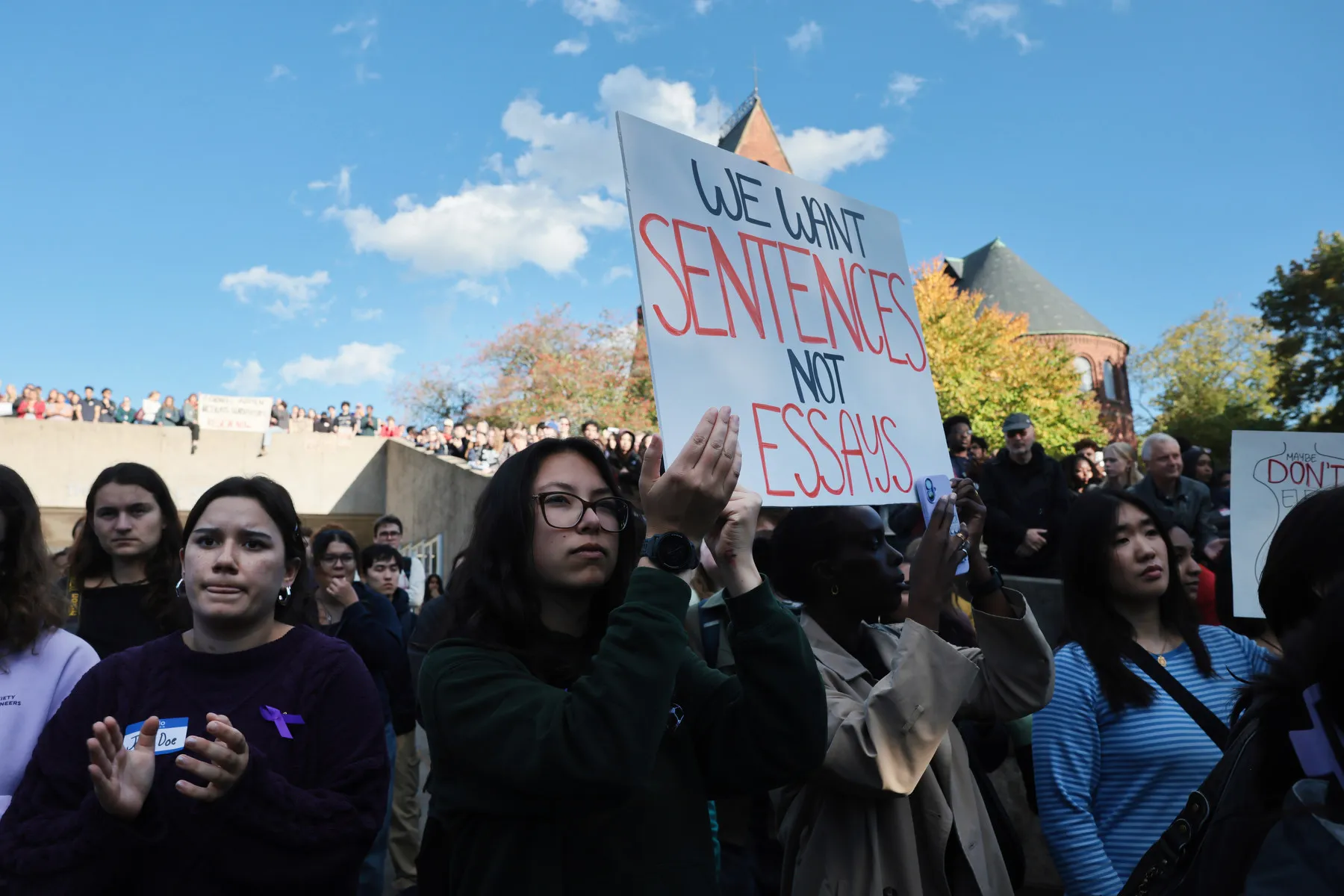
Students fought campus sexual assault long before Cornell, LSU cases
Allegations by two women that Cornell and LSU took insufficient action after they were assaulted on campus have reignited national outrage over how schools respond to sexual violence.
Cornell assault case shows #MeToo didn’t go far enough by Amanda Marcotte
But according to some on the right, Doe has not suffered enough for reporting her alleged assault to the police and then later suing the accused, the university and the fraternity. It’s not enough that she saw no charges filed, or that reportedly only two of the accused were expelled from campus. On top of her existing pain, therefore, many of the MAGA faithful are punishing her further by calling her a liar, implying she’s a slut and even threatening to out her, which would put her personal safety at risk. Whatever their intent, by doing this, they are sending a strong message to any victim of rape who might feel tempted to seek justice: Stay silent, or you’ll be next.
…
Despite the hysterical claims of its critics, #MeToo was never about ruining the lives of innocent men. In a very real sense, the movement was about leveling the playing field, which is so dramatically tilted against victims that it makes justice nearly impossible to achieve. No one truly disputes the importance of due process to handle accusations of sexual violence. That’s why Jane Doe is going through the court system. It’s also why it’s good that, in light of new information, the district attorney is re-opening the case.
But due process is endangered if victims can’t report allegations without facing public abuse and threats of being falsely accused themselves that it becomes psychologically impossible to live their lives. As its name suggested, that was the whole point of #MeToo: to create enough solidarity between victims and allies to make it safe for victims to speak out without their lives being destroyed. If the right really believes in the value of due process, then they would let it play out, instead of dogpiling and harassing accusers so that future victims are too scared to report crimes.
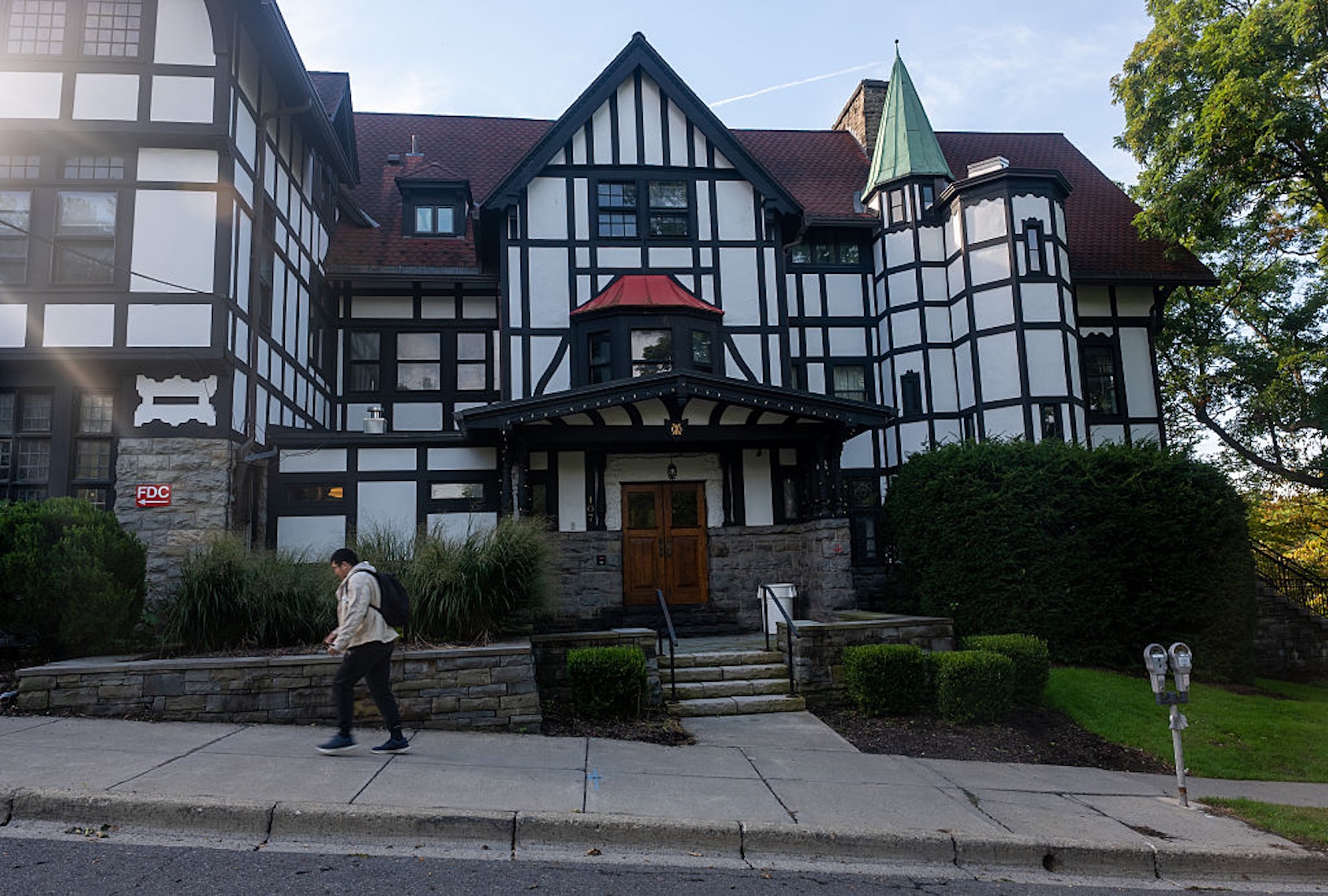
Cornell assault case shows #MeToo didn’t go far enough - Salon.com
The backlash against the woman suing Chi Phi fraternity members is turning into a witch hunt
Thousands of Cornell Students Protest for Accountability in Rape Case by Shireen Akram-Boshar
https://truthout.org/articles/thousands-of-cornell-students-protest-for-accountability-in-rape-case/“The prevalence of sexual assault on campus is due in no small part to Greek life and the way Cornell promotes it,” Quan told Truthout.
“Many of the fraternities on campus have been around for decades — wealthy donors are members of these organizations, and that stream of cash incentivizes the university to preserve their reputation over the health and safety of students,” she added. “The protection that fraternities enjoy from administration makes it easier to get away with sexual assault.”
According to a 2025 survey, 35 percent of undergraduate women at Cornell — more than one in three — reported experiencing sexual assault during their time at the university.
Campus organizations are mobilizing to continue the fight for their demands beyond Monday’s demonstration. Already, they have organized two campus-wide town halls — one on October 1 and another on October 6. The student chapter of the NAACP, in collaboration with other groups like the SDC, is also calling for a “Zero Day” at Cornell on Wednesday — a campus-wide economic blackout along with a seven-hour sit-in at a Cornell dining hall, to represent the seven hours Jane Doe says she was assaulted.
Graduate students like Quan are also attempting to organize against sexual violence on campus through their student union.
“CGSU fought hard for discrimination protections in our first contract that subjected Title IX proceedings to union grievance procedure because we have always known that Cornell’s own disciplinary mechanisms protect the institution and not its students and workers,” Quan said. “As we go up for bargaining again in Spring 2027, we plan to fight to strengthen these protections even further.”
The turnout for Monday’s protest was significant in the context of three years of campus repression of student activism, Huber explained.
“Over the past several years, there has been repression of free speech and protest on campus by the administration under their judicial system. So when I saw thousands of students coming out and protesting despite that crackdown, it was a really, really tremendous feeling,” Huber said.
Huber pointed out the university’s double standard in punishing and even criminalizing Palestine solidarity activists while it overlooked the issue of sexual violence on campus.
What It Feels Like at Cornell Right Now by Kate Manne
I began to do what I do — reading and writing and thinking about misogyny — because of my dismay at how girls and women are treated on the Cornell campus and at other colleges across America. As a professor at Cornell, I have had many, many victims in my office confiding in me their experiences of sexual assault and harassment. Most didn’t even try to report them to the police or the university, and, for those who did, the outcomes were rarely positive. There’s a prevailing sense that campus culture is rape culture, especially in fraternity houses: It’s a deeply embedded feature of life here that is widely known but rarely protested. A 2025 survey conducted by Cornell found 35 percent of undergraduate women reported experiencing “nonconsensual sexual contact” during their time at on the university’s campuses, an increase from the 23 percent in the 2023 survey. In her lawsuit, Jane Doe notes that when she decided to participate in Greek life at Cornell by joining the Tri Delta sorority, she was unaware the former president of Psi Upsilon, Wolfgang Ballinger, had been subject to criminal charges for the rape of a female student at the frat house in 2016.
It’s worth mentioning that Cornell is not unusual in this respect. I say this not to defend my employer but to give you a sense of the scale of the problem: Fraternity houses across the country are hotbeds of rape and misogyny.
In a deeply patriarchal society, groups of boys and men routinely bond over humiliating and exploiting women, as the feminist author Soraya Chemaly has written. And the victim is not only physically and emotionally traumatized following one of the most fundamental imaginable violations: They are likely to be doubted and undermined at every subsequent step of the process. In Jane Doe’s case, the district attorney did not bring any charges after relying on the investigation done by campus police; he didn’t even speak with the men involved. The district attorney just announced he is reopening the case on the basis of new information contained in the civil lawsuit and in recognition of the fact that “it can take years of therapy and healing for victims of sexual assaults to fully process and understand what happened to them.”
My Rape, the Cornell Case—and Why We Need Better Approaches to Teaching How Consent Works by Elizabeth Spiers
When people suggest that Jane Doe—the survivor of the Cornell gang rape—should have acknowledged what happened to her immediately, they’re telling you they have no personal experience of sexual assault. I couldn’t even process what had happened until a few days later. Any sort of analysis or reflection was drowned out by the fact that I was stunned that it happened, embarrassed that it happened, and ashamed that I let it happen to myself.
I let it happen to myself: That’s what I thought. I didn’t think it in the context of questioning what I was wearing (a perfectly acceptable knee-length skirt, by the way), how much I drank (by college standards, not much), or whether it was a good idea to be a frat party at 10 pm (if it isn’t, isn’t the problem with the frat?) I was angry at myself because I had worked hard academically to get to Duke, and showed up there not knowing a single person. I was the first person in my family to go to college. I was smart. How could I have let this happen?
I don’t think of myself regularly as a rape survivor, in part because I don’t think of myself as the proprietor of a body very often—or even as a woman. My self-conception is best described as “brain in a vat.” I work in very male-dominated spaces. When someone is openly sexist to me, I’m sometimes taken aback, because it reminds me that in treating me as a woman, they view me differently, not just as a peer or equally human person.
How could brain in a vat let this happen to her?
I imagine Jane Doe had some similar feelings. Cornell is an Ivy League school, and I’m sure she’s smart and ambitious. After it happened, I have a feeling she did what I did: tried to reason her way out of it, and felt that the fault was hers.
But it wasn’t. She did not make those men do what they did. It was not her responsibility to keep them from raping her–any more than it was mine to heroically subdue my rapist.
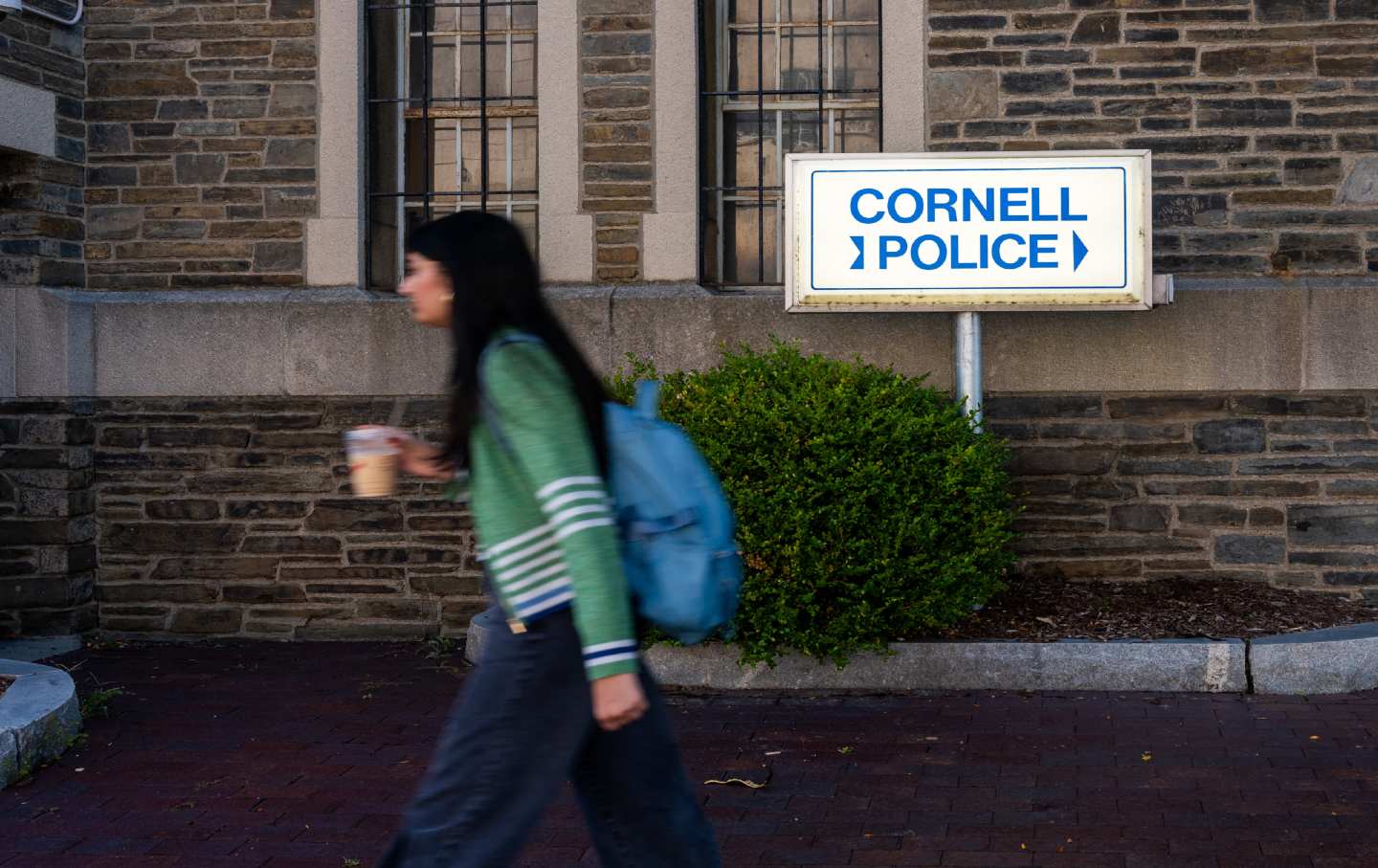
My Rape, the Cornell Case—and Why We Need Better Approaches to Teaching How Consent Works | The Nation
I tried to process the experience of being raped by disassociating. We have to show our kids a better way.
If we want community, we have to act like it by k.w.bogen
https://www.patreon.com/kwbogen/posts/if-we-want-we-to-171597007There's a paradox being introduced here, even if only by suggestion: perhaps don't teach ordinary people how to respond better, because ordinary people might respond badly.
But, my friends, if we cannot expect the BARE MINIMUM from each other (which is learning a few helpful things to say when someone shares what could be the hardest or most painful or most traumatizing experience of their lives) then what the fuck are we even doing here?
The disclosure process is often referred to in the sexual violence literature as "the second rape" or "the second assault" because people are so ill-equipped with how to respond. I am attempting to do real public education work by improving folks' preparedness. Through sharing this basic script, I hope to help make those secondary traumas less frequent, less intense, and less severe. Provision of useful scripts is part of a population-level intervention strategy.
To be clear: I am not saying, "become a survivor's de-facto therapist and offer to be everything to everyone." I am saying, "please learn a few useful scripted lines so you don't hurt a survivor if they decide to share with you."
I am not saying, "take sole responsibility for this person's healing - their wellness is your job now!" But I AM DEFINITELY SAYING, "these skills are useful for being in community with others. And we constantly insist that we are dedicated to community-building, so let's actually do the work."
The repeated introduction of rugged individualism into leftist spaces is a thorn. It is absurd.
I actually do believe that folks can provide support AND direct folks to services with more expertise. And what's so interesting about this commenter's approach is they actually did reflect one of the recommended strategies: offering informational and tangible aid. Tangible aid like a connection to a resource or practitioner. Informational aid like maybe the name of a campus advocacy center or local rape crisis center.
What I'm struggling to understand is how we feel it's reasonable to expect someone to KNOW WHAT THOSE RESOURCES ARE AND WHERE TO DIRECT FOLKS if they can't learn the basics of how to provide empathy, express belief, listen, and show care.
Certainly, ill-equipped support providers can burn out, can require their own resources, and can set boundaries. AND, I think we're moving wayyyyyy toooooo quicklyyyyy into cautioning folks against learning useful skills in the first place.
We're being trapped in a potentially socially violent (or, at least socially disengaged) logic which can actually produce wholly antisocial conclusions: if imperfect support can cause harm, and causing harm is unacceptable, then only perfectly qualified people should be tasked with providing support.
Which means, like, I don't have to and shouldn't have to.
Y'all, this takes SO MUCH responsibility off of the collective and places SO MUCH of it onto folks who are in service professions. Who already do this day-in and day-out. Who might ALSO need some help from the collective. Who might ALSO be hoping that community-members choose to learn and step up and grow. AND it abandons survivors and people suffering to the limited availability of those well-equipped few. It says, "those other people can absorb all the world's suffering while my withdrawal can be conveniently reframed as maintenance of vital social boundaries." But I simply do not think this is an either-or situation.
What is missing from this logic is the truth and science behind social support-seeking, disclosure processes, and subsequent symptom severity. When survivors first disclose to someone, if that person responds well, they are actually less likely to experience clinically-significant PTSD symptoms. They are less likely to experience shame and self-blame. They are buffered against the development of later psychopathology. They feel greater social network connectedness and are more likely to help-seek in ways that alleviate the symptoms that DO potentially emerge.
The first step of receiving care after sexual violence is frequently disclosure, USUALLY to informal support providers like friends, family members, and significant others. The average survivor doesn't go straight to the hospital or walk into a crisis center. They phone a friend. And what that friend says REALLY MATTERS. What that friend says can actually be a difference-maker in whether that survivor winds up requiring higher-level psychological intervention or whether they can recover using the resources already available to them. Responding supportively is an intervention in and of itself. Responding supportively is PTSD-prevention. It is self-blame prevention. It is healing for the person in pain. Don't we WANT to know how to do that? Don't we want to be a part of collective care?
If I had told every person who disclosed to me in social or casual settings, "oh, oops, sorry, I'm not the right person to receive that," by this person's logic, I would need to then know where to send them next. But what if I'm receiving a disclosure from someone in Dehli, and I'm in New England? What if I'm receiving a disclosure from a man, and the local rape crisis center doesn't have an equipped therapist for men, or is wary of men in recovery spaces at all? What if I'm receiving a disclosure from a Trans woman, in an area where the local resources don't actually know how to manage the violence experiences of Trans folks?
Does the average person know what resources are available, local, and tailored? Does the average person know about their local rape crisis center? Or RAINN? Or campus therapeutic resources? Or practitioners in the area offering CPT, PE, EMDR, or other evidence-based trauma treatments? Why would it be unreasonable to expect folks to learn a quick script to minimize or offset harm during the disclosure process, but absolutely reasonable to expect that they would be able to identify those who are better-equipped to provide survivors with care?
…
We can make this all easier by preparing ourselves for the very real social possibility that someone we care about at one point or another comes to us for support after an experience of violence.
I honestly think that giving someone a few minutes of your time to say, "hey, I care about you, it matters that someone did this to you, this absolutely sucks. I can listen for [insert reasonable boundary] now, and then I can follow up to chat about this another time. Let's grab coffee when I have more latitude?" is completely reasonable, still upholds personal boundaries, and still adheres to the script.
And I think we are also seeing SO MUCH OF THIS in black and white rather than shades of real nuance.
I feel safe presuming that we can usually tell when someone's support need goes beyond our capacity. Many of us have those social and pattern recognition skills. If we have a looming deadline and this person needs 2-3 uninterrupted hours of crying and sharing time in order to feel relief, then yes, perhaps we are not the best party. But we can also express to someone, "hey, I really care for you and want to support you, here's a hotline number in the meantime and I will dedicate more space to this next week/at blah blah blah time."


Add a comment: