
Things I'm reading
Are we post-racial, or are our electeds just over being asked to think about race?
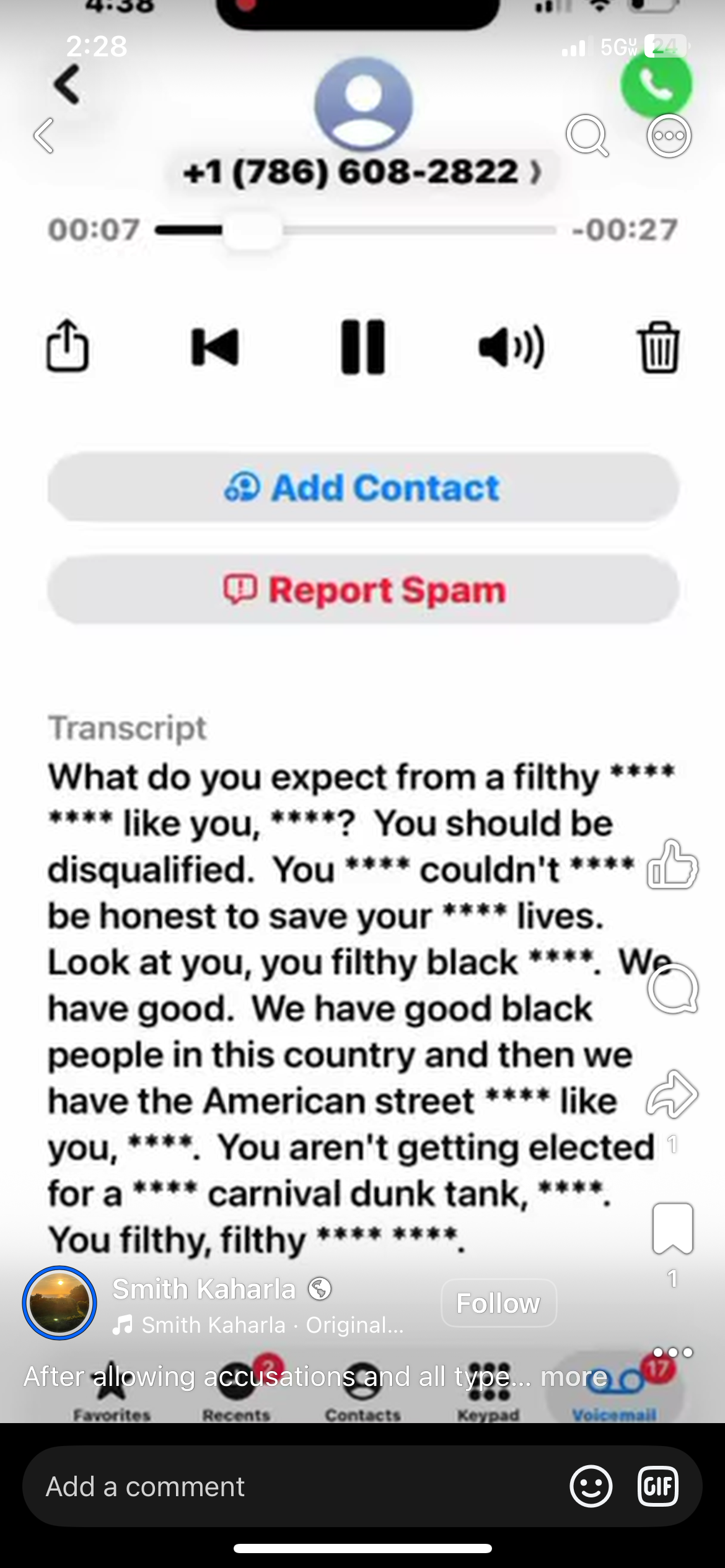
This week, in the West Orange, NJ Mayor’s race, it was revealed that candidates have received racist attacks, including a voicemail with vile racist and misogynistic language. This is, of course, disgusting, unacceptable, and never justified or called for, inside or outside politics.
The reaction of other candidates and current Council members, 3 of whom are also running for Mayor, was muted and underwhelming, but not surprising. That lack of surprise is due to their reactions closely mirroring the reactions that failed to meet the moment when it’s happened on Council Zooms, in Facebook Groups named for the town, in anonymous letters left at houses, and in shouts from passing cars. It’s happened to Black residents, brown residents, Jewish residents, Muslim residents, LGBTQIA+ residents, men, women, and kids.
But each of these groups doesn’t get equal support or attention. The standard response from our elected officials is pining for a past that “wasn’t like this” or some non-specific time that “we weren’t like this.” Few seem able to acknowledge that past as being much more… monochromatic.
Many are quick to blame social media. Others blame the election cycle and how the candidates are conducting themselves. Or they blame our national political shit show, while simultaneously refusing to engage with the impact of those issues locally. Some would likely, in smaller audiences at least, blame us parents, for failing to raise our children to avoid this.
Despite claims that they would stand with all groups, address concerns of any resident that came to them, they have done no such thing. They selectively decide when things are local issues or national or international issues. They have fought with each other behind the dais, though they have avoided using racial slurs 👍, and behaved disrespectfully toward town staff and residents alike. They have used their positions as “leaders” to attempt to restrict speech, repeatedly try to reduce public comment time limits, and to argue for limiting events on town properties.
None of this is to say our elected officials deserve racist, sexist, or any hateful treatment, no one does. But when will we stop pretending we were better than this 40, 20, or even 2 years ago?
If we listened to residents, or former residents, we’d hear the stories of the racism that undergirded the “town we used to be.” Many of our Council members and candidates know this history, because they grew up living here, as they like to regularly point out. But they didn’t see the racism, or maybe more specifically, it didn’t register as such at the time.
I Told You, West Orange, You Fucking Fools | Policy of Truth
About a month ago, I invited the candidates up for election in West Orange to denounce the bigotry of one of their colleagues, Justin Goldsman (see here and here). Not one of them did. A few months…
Even the West Orange landmark of Thomas Edison’s workshop and the very lightbulb we have on our town logo, contain the racism of the undertelling, if not erasure, of the contributions of Lewis Latimer. Latimer was the Black inventor who was deeply involved in the invention of the telephone and light bulb, but whose name is little known compared to Edison and Graham Bell. 🤔
One might point to the fact that he was employed and included by those inventors at all. But there’s a huge jump between them hiring a Black person and them being allowed to hold a representative amount of credit. Just ask any Black person or woman who has had their idea stolen in a business meeting, or on the Council dais.
In a similar vein, the elected leaders of West Orange, and their appointees to various town commissions, the Human Relations Commissioners in particular, repeatedly tell us that “we,” West Orange, are not racist, and that racism doesn’t thrive here. Yet their actions, and the actions of our neighbors don’t match those words, those ideals. While in neighboring towns, similar groups host annual conversations on anti-racism, in West Orange, we are told, “racism is over.” It is a fatal flaw of the HRC that its roots in a political appointment process means they will never take on the charged issues that drive our local politics and our strife.
Other towns hold regular events to support conversations about racism in policing, in schools, and in our government policies and laws. In West Orange, our group for grappling with racial issues holds an annual Dr. Martin Luther King Jr. event where we regularly give the top award to a member of law enforcement. A group famously allied with Dr. Martin Luther King Jr. and the Black (and allied) activists fighting for civil rights, right?
So to our elected leaders, who were born here, raised here, or in similar towns. Those who saw the transition from nearly all white schools to our current wildly diverse student populations (at many schools). Was it really better “then?” Was YOUR experience in that environment really representative of the larger racial tensions? In 1990, West Orange was 84% white, non-hispanic. In 2020, it was 39%, dropping more than half in one generation. Do you think that means we have more racial issues and conflict today? Really? Did we ever reduce the racism in town along the way?
Or do we just have more uncomfortable white people, especially in “leadership?”
Subscribe so you can get my posts directly to your inbox, avoiding dependence on social media, which benefits both of us.
Listening
Islamophobia and Antisemitism Aren’t the Same by The Beinart Notebook
https://peterbeinart.substack.com/p/islamophobia-and-antisemitism-arent
White Man’s World by Jason Isbell and the 400 Unit
I'm a white man living in a white man's world
Under our roof is a baby girl
I thought this world could be hers one day
But her momma knew better…
There's no such thing as someone else's war
Your creature comforts aren't the only things worth fighting for
If you're still breathing, it's not too late
We're all carrying one big burden, sharing one fate

White Man's World by Jason Isbell and the 400 Unit & Jason Isbell on TIDAL
Listen to White Man's World on TIDAL in exceptional sound quality, or on your choice of service
Reading
Harm reduction workers demand oversight of opioid settlement fund spending by Dana DiFilippo
https://newjerseymonitor.com/2026/10/23/opioid-settlement-fund-spending-oversight/Jenna Mellor, executive director of the New Jersey Harm Reduction Coalition, shared a lengthy petition she sent Thursday to Stephen Cha, commissioner of the state Department of Human Services, seeking new rules to ensure settlement funds are spent wisely.
“It’s time for the Department of Human Services to step up into that authority,” Mellor said. “It is a moral responsibility to do so.”
However lawmakers eventually amend the bill, Raquel Romans-Henry of Salvation and Social Justice urged them to prioritize in policymaking racial disparities seen in the opioid crisis and the recognition that addiction is a disease and not a crime.
“For decades, when addiction devastated Black communities, government responded with arrests, prosecution, incarceration, and surveillance. Today, we rightly speak about addiction through the lens of treatment, recovery, harm reduction, housing, and public health. And while that shift is welcomed, we have to tell the truth. When addiction showed up in Black communities, the state built prisons. When addiction showed up in white communities, the state built treatment systems,” Romans-Henry said.
She added: “Black communities endured the war on drugs, and now they are disproportionately bearing the burden of the opioid crisis itself. That reality should shape every single conversation about opioid settlement dollars here in the governor’s office, in the state, in county, and in local offices.”
New Jersey school segregation case back in court as judges weigh potential constitutional violation by Samantha Olander
On Thursday, the plaintiffs argued that the trial court had improperly required them to demonstrate unconstitutional segregation throughout the state’s entire public school system, even though their lawsuit only focused on 23 “severely segregated” districts.
Those districts enroll roughly 15% of New Jersey’s public school students, Lustberg said. He highlighted Essex County, where predominantly Black and Latino districts such as Newark, East Orange, Irvington, and Orange border wealthier, majority-white communities, as evidence of why the state must address segregation across district lines.
“If Newark decides that they want to send their children to some other districts in order to desegregate their schools, they can’t,” Lustberg told the judges. “They don’t have that power.”
…
After the hearing, Vargas and Lustberg expressed frustration about the prolonged legal battle over the case. Vargas also said existing school choice programs remained too limited to provide meaningful options for many families.
“Every day that goes by where there’s no remedy for this is tragic,” Lustberg said. “Students in Newark are going to have to suffer with how long this is taking.”
Retired New Jersey Supreme Court Justice Gary Stein, who helped launch the lawsuit in 2018, called it one of the most significant civil rights cases in the state’s history, and that its outcome could have implications far beyond New Jersey.
Asking the state “to desegregate its schools is not just to wave a flag,” Stein said in an interview with Chalkbeat on Wednesday. “It’s for the purpose of giving those children a better opportunity to succeed in life.”

New Jersey school segregation lawsuit: appeals court hears arguments about enrollment data - Chalkbeat
New Jersey’s long-running school segregation case could eventually change how students attend the state’s public schools.
Courts Reject Trump’s Attempt at Deploying ICE to Intimidate Voters by Mike Ludwig
Trump didn’t create an unaccountable, secret police force that reports directly to the unitary executive so that they could sit on the sidelines. We need to make sure we’re prepared for ICE to try to intervene in the elections up through and after election day.
https://truthout.org/articles/courts-reject-trumps-attempt-at-deploying-ice-to-intimidate-voters/The Department of Homeland Security (DHS), which oversees ICE, has deployed federal agents in multiple states to knock on doors and demand voters verify their identities and registration as part of an “Unlawful Voter Initiative” launched in August. In response to a lawsuit filed on October 19 by labor and voting rights groups, a federal judge in California ruled the DHS initiative violates the Voting Rights Act and ordered federal agents to halt “elections-related field operations and field interviews” in California, Wisconsin, New York, Missouri, Connecticut, Nevada, Georgia, Pennsylvania, and Washington.
…
By deploying federal immigration agents to go door-to-door hunting for so-called “voter fraud” ahead of Election Day, the Trump administration may also be preparing the ground for meddling with election results and suppressing dissent if Republicans perform poorly and lose their congressional majority.
With billions of dollars in funding from Congress, the Trump administration has transformed ICE into a powerful tool of intimidation. ICE agents have injured and killed people in multiple high-profile cases since Donald Trump took office again. Under Trump’s mass deportation campaign, ICE has detained at least 506 U.S. citizens as well as many legal permanent residents. People arrested by ICE are often jailed in facilities where dozens have died amid complaints of medical neglect, including a lawful permanent resident who was found dead in a Texas ICE jail last week.
'Tommy' from viral El-Sayed video is former Sen. Hawley staffer with Christian nationalist ties by Marisa Kabas
https://www.thehandbasket.co/p/tommy-teepell-abdul-el-sayed-viral-video-town-hall-josh-hawleyIn the now-viral video, we see a young white man in a gray long-sleeve shirt standing up in a crowd and shouting a question: “Will you disavow the Muslim Brotherhood?” He aimed his question at Democratic Senate candidate Abdul El-Sayed at a town hall event in Caro, Michigan, on Saturday. From the stage, El-Sayed met it with steely resolve. “Why are you asking the question?” he replied. “What are you implying?”
For nearly five minutes, El-Sayed questioned the man—who said his name was “Tommy” and identified himself as a Christian—about his understanding of the Constitution and the religious freedom it affords all Americans. He compared the “dual loyalty” question to those asked of John F. Kennedy, the first Catholic president, and asked whether Tommy would disavow any attempts to read religion into the Constitution. Tommy refused, rejecting El-Sayed’s point that the Constitution allows us all to worship any god, or none at all. After outing himself as a bad-faith interlocutor, Tommy sullenly left the room.
The Handbasket is first to report that Tommy is Thomas Teepell, who, according to his X and Facebook profiles, currently lives in Detroit. Teepell served as Operations Director for Missouri Republican Senator Josh Hawley until February of this year, according to Legistorm. He then took a job as Political Director for the failed gubernatorial campaign of Philip Sarnecki, a Republican businessman in Kansas.
Tommy’s father is Timmy Teepell, a Republican strategist who worked for congressman and then Louisiana Governor Bobby Jindal from 2004 to 2011; he also ran Jindal’s ill-fated presidential primary campaign in 2015. He joined the consulting firm OnMessage in 2011, and helped the virtually unknown Hawley get elected Attorney General of Missouri in 2016. Two years later, he helped Hawley become a United States Senator.
What brought the younger Teepell to the small town of Caro and his viral moment with El-Sayed? An October 2nd story in the University of Michigan student newspaper, The Michigan Daily, revealed that a conservative PAC called America Next offered College Republicans $200 to travel to an upcoming El-Sayed town hall in Flint to “boo” him and ask him inflammatory questions—hoping to spark embarrassing viral moments for the candidate.
CEO of Palantir Says AI Will Seize Power Away From College-Educated Women by Frank Landymore
From the guy who bragged that he chats with “real Nazis” and mused about how legalizing war crimes would be good for his bottom line comes another zinger that will have you yearn for the days when CEOs acted more like cautious bureaucrats than ‘roided out pro wrestlers.
In a CNBC interview Thursday, Palantir cofounder and CEO Alex Karp opined that AI will undermine the influence of “highly educated, often female voters” and empower working class men instead. And anyone who doesn’t realize this political reality, he added, belongs in an “insane asylum.”
“This technology disrupts humanities-trained — largely Democratic— voters, and makes their economic power less, and increases the economic power of vocationally trained, working-class, often male, voters,” Karp elaborated in a portion of the interview highlighted by The New Republic.
“And so these disruptions are gonna disrupt every aspect of our society. And to make this work, we have to come to an agreement of what it is we’re going to do with the technology; how are we gonna explain to people who are likely gonna have less good, and less interesting jobs.”
Palantir provides AI-powered surveillance tech to the military and government, including agencies like Immigration and Customs Enforcement, as well as foreign militaries like the Israeli Defense Force

CEO of Palantir Says AI Will Seize Power Away From College-Educated Women
Palantir CEO Alex Karp said AI would disrupt "humanities trained" and "Democratic voters" who are largely women.
Time to De-Privatize by Robert Kuttner
Other categories of privatization include:
Vouchers. School vouchers divert money from public schools. They were advertised as expanding options for the poor, but in many states, such as Texas, they subsidize middle-class and well-to-do parents to send their kids to private schools, while starving public ones. Since all states get federal education funding, federal policy could bar aid to states with voucher programs.
Contracts. Over the past several decades, different levels of government have contracted out basic public services. This is often far less efficient. The main cost savings occur because the private vendor often pays the workers less than the civil service counterpart. Government has contracted out prisons, has hired temp agencies to fill civil service vacancies, has privatized much of the VA, and a good deal more.
Payment intermediaries. In the case of Medicare, government uses private insurance companies to handle payments to providers. This is more costly than having government do it directly. Separately, the IRS has in the past hired private collection agencies that cost more than they recover. Hiring more in-house staff to audit and collect taxes owed, as the Biden administration did through the Inflation Reduction Act, has an enormous return on investment.
Corrupt windfall scams. Chicago privatized its parking meters in 2008, giving a consortium led by Morgan Stanley a 75-year lease. The administration of Mayor Richard M. Daley got a payment of $1.15 billion up front and Chicagoans will pay an extra several billion over the life of the deal, but the city will get about a billion less. By 2025, the investors had already collected double what they paid the city for the deal. Cities get lots of federal money. Federal regulations could make deals like this illegal.
Services that government can do more efficiently. Several basic public services such as electricity and water and bus service are delivered in some places by private entities and in other places by public ones. Studies repeatedly show that public power is cheaper to consumers and more environmentally sensitive than private power. FDR called this “yardstick competition.” Government should be acting to expand public power.
Health care and drugs. Private health insurance is a costly mess. Medicare is cheaper, fairer, and more efficient. Universal Medicare would be still more efficient. Prescription drugs, likewise, are substantially subsidized by public research dollars, while drug companies keep gouging consumers. Many basic drugs could be produced and sold at cost by a public entity.
…
There has been a lot of talk in progressive circles about the most important things for a president and Congress to do if a Democrat is elected in 2028. In addition to reversing the damage to government done by the Trump administration, we need a reversal of longer-term privatization.
…
This agenda may sound obscure and secondary compared to the more urgent needs to restore government. But in Britain, the new Labour prime minister, Andy Burnham, has made reversing decades of privatization the centerpiece of his program. That includes bringing back rail and bus service to public ownership, expanding public energy, as well as ending privatized water and sewer services, and restoring underfunded public entities such as the National Health Service.
These measures not only improve public services, but they have an important subtext: Public is usually better, as well as fairer.

Time to De-Privatize - The American Prospect
When the Democrats take back Congress, we need an agenda to return public functions to government and reverse decades of privatization.
How Trump’s FBI Purge Saved Lindsey Graham and James Clyburn From a Bribery Investigation by Molly Redden, Avi Asher-Schapiro, William Turton, Kirsten Berg
In early 2025, the FBI opened a sweeping investigation into bribery on Capitol Hill with Graham’s steakhouse dinner at the center. Kao confessed to federal agents that his business model consisted of bribing public officials in exchange for government contracts, and that the research Navatek was providing to the government was often worthless.
The scheme involved some of the most powerful figures in Congress, he said — in both parties. In South Carolina, Kao told agents, Navatek made a campaign cash-for-contracts deal not only with Graham, but also with the state’s top Democrat, Rep. James Clyburn, and another influential Republican, Rep. Joe Wilson.
Kao told agents that Graham in particular left little room for ambiguity: “This is how much I want, and how much I am going to give you,” Kao remembered Graham saying, according to notes one agent took during their debrief in late 2024.
Kao’s admissions would constitute a vast criminal bribery scheme if they could be proved in court — a challenge, given recent Supreme Court rulings that have made it more difficult to win corruption cases. Kao himself posed another hurdle. He was facing prison for fraud and campaign finance violations and was speaking to the FBI in the hopes of reducing his sentence.


Add a comment: